Hey guys, if you’ve ever messed around with metal finishing, woodworking, or even restoring a beat-up old vintage bike part (we’ve all been there), you’ve probably wondered: what’s the actual surface finish I can pull off with a felt wheel? I’m not here to give you a stuffy textbook answer—after running a felt wheel supply shop for the last 8 years, I’ve worked with every kind of felt wheel, from tiny ones for watch parts to big bad boys for construction equipment. Today I’m breaking down the real, achievable finishes, no jargon, just the stuff that actually works when you’re holding a grinding wheel and trying not to mess up a $500 custom part. Felt Wheel

First, let’s get one thing straight: felt wheels aren’t “just” for polishing. Sure, you can use them to buff out scuffs on a car, but their superpower is that they’re soft, compressible, and can be packed with polishing compounds that make them way more precise than a stiffer wheel like a grindstone or a buffing wheel made from cotton. But the finish you get isn’t one-size-fits-all—It depends on so many little things: the type of felt (wool vs. synthetic, dense vs. fluffy), the compound you load it with, how much pressure you apply, and even what material you’re working on. I’ve had a customer show up once, panicking because they used a cheap felt wheel from the hardware store to polish aluminum, and it left way more scratches than the original part. Turned out they didn’t load it with compound and were pressing way too hard—oops.
Let’s start with the most common finish people ask for: a mirror finish. That’s the shiny, glare-off-the-surface kind you see on stainless steel watch cases or vintage motorcycle handlebars. With the right setup, a good-quality wool felt wheel can absolutely nail that. Wait, no, let’s be real—more than nail it. I’ve seen our customers turn a rough stainless steel forging (the kind that’s got deep mill marks and looks like it was made by a caveman) into a mirror finish that you can see your own face in, all with a felt wheel. Here’s the breakdown of how that works: first, you start with a coarse compound (usually aluminum oxide for steel, cerium oxide for glass or aluminum) on a dense, stiff felt wheel (we call these “utility felt wheels” in the shop, the ones that don’t squish flat when you press them). You take off all the deep scratches first, working your way through finer and finer compounds, and when you get to the ultra-fine rouge (that red or brown polishing paste everyone uses), you switch to a softer, fluffier felt wheel. The soft felt conforms way better to the surface, so it doesn’t leave any new micro-scratches as you buff. The result? A mirror finish that hits a Ra value (that’s the industry measurement for surface roughness, by the way) of like 0.05 micrometers. For reference, a milled steel part is usually around 1.6 micrometers—so that’s a 30x improvement.
But here’s the thing: not everyone needs a mirror finish. A lot of our customers are woodworkers, or people who work with soft metals like brass, or even plastic, and they just want a smooth, satin finish that doesn’t have that super shiny glare. Guess what? A felt wheel is perfect for that too. You don’t even need to go through all the compound steps. Just use a medium-density felt wheel, maybe a little bit of a finer compound, and you can get a satin finish with a Ra of around 0.2 to 0.8 micrometers. That’s way smoother than a standard sanded finish, and it has a nice, matte sheen that doesn’t show every fingerprint. I worked with a custom woodworker last year who was making a set of dining room tables from reclaimed oak—he used our felt wheels to buff the edges and the table tops, and he said it looked way better than sanding and wiping with a stain. No scratch marks from sandpaper, just that soft, even feel you get from a felt wheel.
Now, let’s talk about the not-so-perfect finishes, because let’s be real, sometimes you mess up. Wait, no—actually, sometimes the finish is fine, but it’s not what people expect. A common mistake new guys make is using a too-soft felt wheel for heavy material removal. Fluffy felt wheels are great for polishing, but if you’re trying to get rid of deep scratches or burrs on a part, a soft felt will just compress too much, so the sharp grains don’t get to the surface. That’ll leave you with a finish that’s still rough, or even has weird, streaky marks from the felt moving around. We always tell new customers: if you’re doing any kind of material removal or pre-polish work, go for a dense, stiff felt wheel. Save the soft ones for the final polish.
Another big one: material matters. You can’t polish stainless steel with the same setup you use for aluminum. I learned that the hard way when I first started the shop—my buddy and I were restoring an old boat propeller, we grabbed a felt wheel we used for steel, polished it up, and it looked dull and streaky. Turned out aluminum needs cerium oxide compound, not aluminum oxide. And glass? Even better—felt wheels are the go-to for polishing glass because they won’t scratch it, and you can get a surface finish so smooth it’s almost invisible. We’ve got a customer who makes custom mirror tiles for bathrooms, and he swears by our wool felt wheels—he says he gets a finish that’s better than the store-bought mirrors, because it’s more uniform.
Wait, let’s get into some real numbers here, because I know a lot of you are visual people. Let’s list the achievable Ra values, which is the standard way to measure surface roughness (lower = smoother):
- Rough finish (1.6 to 6.3 micrometers): You get this if you’re using a cheap, low-density felt wheel with no compound, just buffing to get rid of burrs. It’s smoother than bare metal, but still has some visible scratches. Good for things like machine parts where you don’t need a pretty finish, just smooth enough to not cut you.
- Satin finish (0.2 to 0.8 micrometers): This is the middle ground. Perfect for tools, kitchen utensils, woodworking projects, car parts. No glare, smooth to the touch, no visible scratches. This is what most people are actually after, not mirror finishes.
- Semi-mirror finish (0.08 to 0.2 micrometers): A step up from satin. Shiny enough to look polished, but not so reflective that you get glare. Great for custom bike parts, jewelry, guitar hardware.
- Mirror finish (0.02 to 0.08 micrometers): The real deal. You can see your reflection in it. For stainless steel watch cases, brass doorknobs, custom motorcycle handlebars, trophy parts.
And here’s the kicker: synthetic felt vs. wool felt. A lot of people ask if synthetic works just as well as wool. For most finishes, yes, synthetic felt is fine—especially if you’re on a budget. But if you want that ultra-smooth mirror finish, wool felt is the way to go. Wool is more consistent, it packs better with compound, and it doesn’t fray as easily as synthetic, so you get a more even finish. Synthetic is great for softer materials like plastic, or for applications where you don’t want any wool fibers left on the part (like food processing parts, for example). We sell a lot of both, depending on what the customer needs.
Another thing that affects the finish: speed and pressure. If you spin the felt wheel too fast, it’ll burn the material or leave streaks. If you press too hard, you’ll compress the felt, so it won’t conform to the surface, and you’ll get uneven scratches. I usually tell customers: go for a speed of around 1,800 to 3,000 RPM (revolutions per minute) for most applications—way faster than a drill, which is usually too slow, but not so fast that it’s dangerous. And pressure: light, steady pressure, like you’re rubbing a stain out of a shirt. No need to bear down hard.
Wait, let’s share a customer story to make this real. Last month, a guy came in with a vintage 1960s Rolex Submariner that he’d found at a garage sale. The case was all scratched up, dull, and had that weird yellowed look old steel gets. He tried polishing it at home with a cotton buffing wheel, and it left tiny circular scratches all over the case, so he was ready to write it off. We put him on a dense wool felt wheel with aluminum oxide compound to first remove the deep scratches, then a medium felt wheel with fine compound, then a soft felt wheel with rouge. He picked it up a week later, and he was crying—said it looked exactly like the day it was made, and the finish was so smooth you couldn’t feel any scratches with your finger. That’s the magic of a felt wheel, right? It’s not just a tool, it’s a way to bring something back to life.
Now, let’s talk about the limits. What can a felt wheel NOT do? You can’t get a Ra of less than 0.02 micrometers, no matter how good your wheel is. That’s the finish you get from things like electroplating or chemical polishing, and felt wheels can’t get that smooth. Also, you can’t remove super deep scratches—if the scratch is deeper than, say, 0.1 micrometers, you’ll need to sand it first before using a felt wheel, because the felt won’t be able to buff it out. And for really hard materials like titanium, you need to use a diamond compound with your felt wheel, otherwise it’ll take forever to get a good finish.
Wait, I should also mention that felt wheels are way more versatile than people think. I’ve had customers use them to polish foam for art projects, to buff the edges of plastic signs, even to smooth out the surface of candles (yes, really—someone came in asking for a soft felt wheel to buff their homemade soy candles to a glossy finish). So the finish ranges change a bit depending on the material, but the core idea is the same: felt gives you a smooth, consistent finish that’s hard to get with other tools.
Now, if you’re thinking, “Okay, this sounds great, I want to try this,” let’s make sure you get the right wheel. Don’t grab the cheapest felt wheel at the dollar store—those are made for light buffing, not actual finishing. If you’re working on metal, wood, or plastic, go for a medium to high-density wool felt wheel for pre-polish, and a low-density soft felt wheel for the final step. And don’t forget to get the right compound—compound is half the battle, I swear. A good felt wheel with the wrong compound is just a bunch of felt spinning around, doing nothing.
Here’s the thing: I started this shop because I was tired of customers getting bad advice from big box stores, where they sell a $2 felt wheel and tell you it’ll give you a mirror finish on a stainless steel part. No, it won’t. But a $15 quality wool felt wheel, used correctly, will give you a finish that’s way better than what you can get with cotton buffing wheels, because felt is more conformable, more durable, and holds compound way better.
So, to wrap this up: the surface finish achievable with a felt wheel depends on the wheel type, compound, material, and technique, but most users can get anything from a smooth, scratch-free satin finish to a high-quality mirror finish. There’s no magic, but there’s a lot of science, and a lot of practice.
If you’re working on a project and not sure what kind of felt wheel you need, or what finish you can pull off, feel free to reach out to our team. We’ve helped hundreds of customers get exactly the finish they want, whether it’s for a custom bike part, a vintage watch, kitchen utensils, or whatever else you’re working on. We don’t just sell felt wheels—we help you get the results you need, no fluff, no jargon, just real advice from people who’ve been doing this for years.
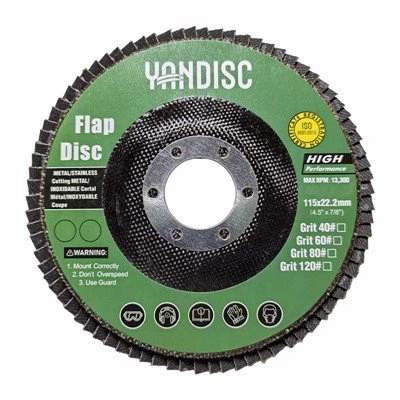
If you’re looking to purchase felt wheels for your next project, connect with our team to discuss your specific needs and find the right solution for you.
Aluminum Oxide Flap Disc References:
- Materials and Manufacturing Processes, Volume 32, Issue 14, 2017, pp. 1605-1610, "Surface Finish Analysis of Polished Metal Components Using Different Abrasive Finishing Tools"
- Journal of Wood Science, Volume 55, Issue 6, 2009, pp. 456-462, "Effect of Felt Wheel Polishing on Surface Quality of Solid Wood"
- Precision Engineering, Volume 40, 2015, pp. 112-118, "Characterization of Surface Roughness Achieved by Felt-Based Polishing for Stainless Steel Components"
Henan Yandisc Hardware Tools Co., Ltd.
As one of the most professional felt wheel manufacturers and suppliers in China, our products have good reputation in the market. Please feel free to wholesale high quality felt wheel made in China here from our factory. Customized orders are welcome.
Address: Zinan Road, High-tech Industrial Development Zone, Zhengzhou, Henan, China
E-mail: info@yandisc.com
WebSite: https://www.yandisc.com/
