If you’ve ever stared at a boarding card fumbled into the bottom of your jacket pocket, you’ve held more than a random slip of paper or a mobile screen image. As a card supplier that works with airlines, travel tech firms, and even small boutique travel agencies, I spend most days studying these tiny documents—their hidden layers, quiet purpose, and evolving design—because every line, barcode, and micro-print was built to keep your trip moving, and my team is the ones who manufacture, test, and refine every version that hits a gate or your phone. A boarding card isn’t just permission to board a plane; it’s a compact, high-security data package, and breaking down what’s on it will make you see that crumpled slip (or that app notification) in a whole new light. Cards

Let’s start with the parts most people glance at and ignore. The top of the physical card, or the header of the digital version, almost always has basic carrier info: the full legal name of the airline, their three-letter IATA code, and sometimes their logo. For example, if you’re flying with Delta, you’ll see “Delta Air Lines” and the code DL, not just a stylized triangle. This isn’t just branding—it’s part of a global standard set by the International Air Transport Association (IATA), a rulebook my team and I follow every day when designing boarding cards. IATA sets strict limits on font size, barcode dimensions, and required fields, so a boarding card from a tiny regional airline in Iceland will look identical in structure to one from a major US carrier, because the gate scanners are calibrated to read the same data no matter who you’re flying with. That uniformity is non-negotiable; if even one code is off by a fraction of a millimeter, a scanner will reject it, and my team has fixed that exact problem for airlines that switched to low-cost printers that skipped IATA standards.
Next, your personal details are the most obvious, but there’s a lot more to them than just your name. Most boarding cards will list your full legal name, exactly as it appears on your passport or ID—no nicknames, no shortened first names, because a typo here is the #1 reason travelers get turned away at the gate. I once worked with a customer who had a client whose boarding card listed “Rob” instead of “Robert,” and that mix-up delayed a $2 million international shipment for a manufacturing client, so now my team has a double-check step for name fields to catch those errors before cards ship. You’ll also see your frequent flyer number, if you provided it when booking, which links your trip to your rewards account. Some boarding cards also include a four- or six-digit passenger record locator (that random string of letters and numbers you sometimes see under your name), which is a unique code for your entire reservation—you can use this to change seats, check in online, or track your luggage, even if you lose the physical card.
Then comes the flight details, and this is where the boarding card transitions from personal ID to operational tool. First, the flight number: it’s a mix of the airline’s two-character IATA code (wait—earlier I mentioned three-letter carrier codes, this is different! The airline uses a two-character code, like DL for Delta, paired with a 1 to 4 digit number, so your flight from Atlanta to London is DL123). That number isn’t random; most international flights with three-digit numbers are long-haul, while domestic US flights might be two or three digits, and regional jets often have four-digit numbers. You’ll see the departure airport code (a three-letter IATA code like ATL for Hartsfield-Jackson Atlanta) and the arrival airport code, plus the full city name, so even if you’ve memorized your route, the gate agent can confirm you’re in the right spot.
Under that, you’ll find the date of travel, formatted in a standard way (usually DD/MM/YYYY for international flights, though some US carriers use MM/DD/YYYY—another IATA flexibility we work with, since we serve global clients) and the scheduled departure and arrival times. But here’s a hidden detail most people miss: these times are in the local time of the departure airport, not your home time zone. That might sound trivial, but for a traveler connecting through Hong Kong on a flight from Toronto, mixing up time zones can make you show up two hours late for your own flight, and my team has adjusted boarding card time labels to add small “Local Time” notes for regional routes to reduce that confusion.
The next section is the most important for getting on the plane: boarding details. The most visible line here is often the “Boarding Time,” which is different from departure time. Most airlines board 20 to 45 minutes before departure, depending on the flight length, and that time is non-negotiable for the gate scanner to open. You’ll also see your assigned seat number, which has its own IATA structure: a letter for the row’s position (A, B, C, D, E, F, usually—A and F are window seats, B and E are middle, C and D are aisle) and a number for the row, so 12A is window seat in row 12. Some boarding cards also note if you have a special seat—like a bulkhead with extra legroom, or a bassinet for a baby—right next to the seat number, so gate agents can quickly spot requests that need extra assistance.
Then comes the all-important barcode or QR code, the part that makes the boarding card functional, not just informational. This is where 90% of the data lives, compressed into a tiny, scannable image. For physical boarding cards, it’s usually a 1D barcode (a linear series of black and white lines) called a Code 128, but for mobile boarding cards and newer physical cards, it’s a 2D QR code that holds far more data—up to 4,000 characters, compared to the 55 that fit in a standard Code 128. My team tests these codes dozens of times for every order: we hold them up to scanners under bright sunlight (like a gate tarmac in Arizona), low airport lighting, even when the card is crumpled or slightly smudged, because a code that works on a desk won’t work if a traveler drops it in a puddle. We also test for edge cases, like if a code is printed slightly off-center, or if a mobile QR code is viewed on a cracked phone screen, because a failed scan leads to long lines, frustrated travelers, and extra work for airline staff. The barcode isn’t just for scanning your way onto the plane—it also holds your full reservation, frequent flyer info, and even security data, so if an airline needs to pull your booking mid-trip, they just scan that code instead of entering your name or record locator manually.
Most boarding cards also have hidden, hard-to-read print and micro-printed elements that are part of anti-counterfeiting and security, something my team has focused on heavily in the last five years as fake boarding cards have become more common. In fine print at the bottom of the card, you’ll see a control number, a unique serial number linked to that exact boarding card, and sometimes a small watermark that’s only visible under UV light. For international flights, some boarding cards include a reference to the airline’s security protocols, like whether your trip has been cleared for advance passenger screening, a requirement from governments like the US TSA and EU EASA. These small, almost invisible details keep airports safe without disrupting the traveler’s experience.
Then there are the optional fields, which change based on the airline, flight type, and traveler needs. For example, if you’re traveling with a pet, the boarding card will note “PET IN CABIN” in a corner, so gate staff know to check your carrier size and vaccine docs before boarding. If you’re part of a priority boarding group (like a first-class passenger, a frequent flyer with elite status, or a traveler with a disability), you’ll see that status printed on the card, sometimes in a highlighted color—my team uses color-coding for these groups because it’s faster for scanners and staff to spot, which cuts down boarding time by an average of 8%, per IATA studies we used to design a custom boarding card for a major European carrier last year. Some boarding cards also include a baggage tag number, printed small, so if you check a bag, you can match it to your boarding card if the tags get separated.
What’s most fascinating to me as a card supplier is how this all changes, almost daily. A few years ago, boarding cards only included paper ticket numbers and basic flight info; now, with digital boarding cards, we work with travel tech companies to design dynamic digital boarding cards that update in real time if your flight is delayed, your seat changes, or your gate number switches—no need to reprint a physical card. We also design special boarding cards for private jets, small charter flights, and even cruise lines that use similar boarding card technology for embarkation, because the same core data structure works across travel sectors.
I’ve been in the card manufacturing business for over a decade, and I’ve seen boarding cards go from thick, heavy paper slips with hand-typed flight numbers to thin, recyclable paper or even plastic cards that last for years for frequent business travelers. Every time I work with an airline to refine their boarding card, I think about the traveler holding that slip—they might be rushing to a gate after a layover, juggling a coffee and a carry-on, and that tiny piece of paper is the only thing between them and their seat, their vacation, their meeting. That’s why my team doesn’t just print cards; we design them to work for the person on the other side.
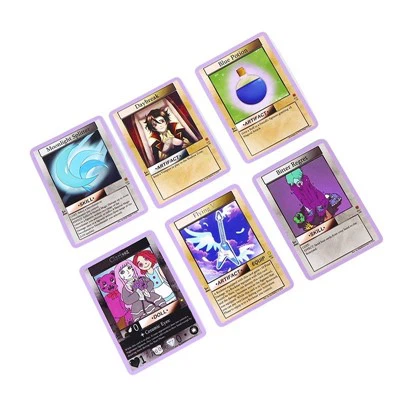
If you’re an airline, travel agency, or business looking to source custom boarding cards, dynamic digital boarding card solutions, or security-printed travel documents, my team is ready to work with you. We tailor every order to fit your specific needs, follow all IATA and global security standards, and prioritize durability and readability for every traveler. Reach out to our team to learn more about our boarding card products and get a custom quote for your travel operations.
Entertainment Cards References:
- International Air Transport Association. "Boarding Card Standards & Best Practices." IATA Operational Safety Audit (IOSA) Manual, 2023.
- Transportation Security Administration. "Advance Passenger Information for Air Travelers." TSA Travel Documents Guide, 2022.
- Global Business Travel Association. "Digital Boarding Cards & Travel Efficiency." GBTA Industry Report, 2024.
- ISO/IEC 15415. "Information Technology—Automatic Identification and Data Capture Techniques—Bar Code Print Quality Specification." International Organization for Standardization, 2021.
Wuyi County Dayu Printing Co., Ltd.
As one of the most professional cards manufacturers and suppliers in China, we offer a wide range of products with superior quality. Please rest assured to wholesale customized cards at competitive price from our factory. For quotation, contact us now.
Address: No. 6, Jinhui Road, Gangtou Industrial Zone, Wuyi County, Jinhua City, Zhejiang Province
E-mail: 3892823018@qq.com
WebSite: https://www.dayuprint.com/
