If you’ve ever walked into a job site—whether it’s a big commercial renovation, a DIY home workshop, or a concrete repair gig—you know how frustrating old flooring can be. Scuffed tile glue, peeling linoleum, stubborn thinset, or that super-hard 90s-era carpet adhesive that acts like it’s fused to the subfloor? That’s where electric floor scrapers come in. As someone who’s been supplying these bad boys to contractors and handymen for years, the question I get all the time is: “What’s the operating speed range of an electric floor scraper?” It’s not a one-size-fits-all answer, but I’m gonna break this down like I’m chatting with you over a job site coffee break—no jargon, no fluff, just the real deal that’s actually useful. Floor Scraper
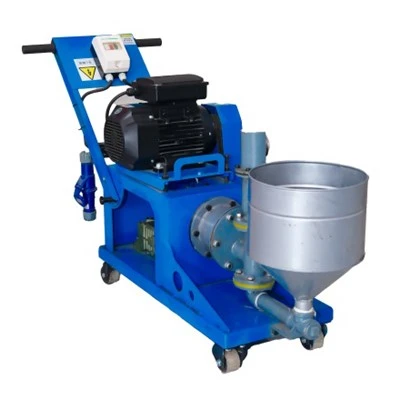
First off, let’s get one thing straight: when people talk about “operating speed” for these tools, we’re not talking about how fast you can mow a lawn or zip down a sidewalk. For electric floor scrapers, two speed metrics matter most: oscillations per minute (OPM) and strokes per minute (SPM). Yeah, I know, acronyms, but stick with me—these are basically the two numbers that tell you how hard and fast the tool’s chisel is hitting the floor. A lot of new folks mix these up, so let’s clarify quick: OPM is for the wiggly, side-to-side motion of smaller scrapers, and SPM is the up-and-down (or back-and-forth) thud-thud that bigger, heavy-duty models use. That’s the baseline before we even get to the range.
Now, the operating speed range isn’t just pulled out of thin air—it’s tailored to what you’re scraping. I’ve seen a guy try to take out ½-inch thick epoxy with a mini hand-held scraper cranked to max speed and wonder why it took him three days. Conversely, another guy tried to scrape delicate vinyl plank from a wood subfloor with a heavy-duty model set to the lowest setting and ended up gouging the wood. So the range is split into three main categories of electric floor scrapers, and each has its own sweet spot—let’s walk through ’em.
First up: the compact, hand-held electric scrapers. These are the ones you see small contractors or DIYers grabbing for tight spaces—like corners, around baseboards, or scraping small sections of linoleum in a bathroom. What’s their speed range? Typically 1,000 to 3,000 OPM (remember, that’s side-to-side wiggles). I’ve got a model in my warehouse that hits exactly that range, and I swear it’s the go-to for anyone working under cabinets or in closets. Why that range? The lower end (1k to 2k OPM) is for soft stuff: thin vinyl, peel-and-stick tile, old carpet adhesive that’s already starting to lift. Crank it above 2.5k OPM, and the mini chisel starts vibrating so fast you’ll lose control if you’re not holding it tight—plus, it can chew through thin subflooring if you’re not careful. I once had a customer bring back one of these because he set it to 3.2k OPM and gouged a pine subfloor that cost him $200 to replace. Lesson learned here: compact = lower max speed, for delicate jobs.
Next, the mid-sized electric floor scrapers. These are the workhorses—most contractors own at least one of these. They’re a step up from the hand-helds, a bit heavier, have a bigger chisel, and can handle most average renovation jobs: like scraping ⅛-inch thinset from a concrete slab, removing old linoleum from a 10×12 room, or pulling up ceramic tile that’s been glued down for 10 years. Their speed range is 1,500 to 4,500 SPM (back-and-forth or up-and-down strokes, not side-to-side). That’s a bigger range than the mini’s, which is what makes these so versatile. Let’s break that down: 1.5k to 2.5k SPM is for soft to medium stuff—vinyl, thin carpet glue, small area rugs. The middle, 2.5k to 3.5k SPM, is where I keep mine set for 90% of my jobs—thinset up to ¼-inch, medium-duty tile adhesive, and even thin epoxy. The upper end, 3.5k to 4.5k SPM? That’s for heavy lifting: thick thinset, old built-up mastic, even small patches of concrete that are stuck to the subfloor. I had a job last year scraping ¾-inch thick adhesive that a previous contractor had layered down on a commercial warehouse floor—my mid-sized scraper at 4.2k SPM took half the time a guy with a demo hammer took, and was way easier on his back. Pro tip here: if you’re using the upper end of the mid-sized range, invest in a good pair of anti-vibration gloves—your wrists will thank you after a full day.
Last, the heavy-duty electric floor scrapers. These are the big boys—used for large commercial jobs, tearing out entire floors in grocery stores, warehouses, or big office buildings. We’re talking 50+ pound tools here, with a chisel that’s 2 inches wide instead of the 1-inch on mid-sized models. Their speed range is 2,000 to 5,500 SPM. That’s the widest range, and for good reason. The lower end (2k to 3k SPM) is for scraping delicate concrete finishes if you’re resurfacing, or removing thin underlayment without damaging the slab. The middle (3k to 4.5k SPM) is the workhorse of heavy-duty jobs—taking out heavy thinset, thick epoxy, and mortar beds. The upper end (4.5k to 5.5k SPM) is for the toughest stuff I’ve ever encountered: ceramic tile that’s been glued with industrial mastic, or old linoleum that’s been sealed with multiple layers of paint over the years. I supplied a crew for a Target renovation last year that used one of these set to 5.2k SPM to strip 20,000 square feet of old linoleum, and they finished two days ahead of schedule. The only catch with these big guys? They’re not for small jobs—using a 50-pound scraper in a 10×10 room is like using a sledgehammer to hang a picture: overkill, and you’ll wear yourself out before you’re done.
Now, wait a second—speed range isn’t the only thing that matters. I can’t tell you how many times a customer has asked for a scraper with the highest speed, only to realize they need the right power to go with it. A low-voltage electric scraper with a max speed of 5k SPM won’t do squat against thick adhesive—you need 120V or 240V for heavy models to maintain that speed under load. Also, some scrapers have variable speed dials, right? That’s a game-changer. My personal favorite mid-sized model has a dial that lets me tweak speed by 100 SPM increments, so if I hit a spot that’s a mix of soft and hard, I can adjust on the fly without switching tools. That’s way better than a fixed-speed model that’s either too fast or too slow for the job.
Another thing to keep in mind: what’s under the flooring you’re scraping? If you’re working on a wood subfloor, you don’t want to crank the speed all the way up—too many vibrations at max speed will cause the chisel to bounce, which can gouge the wood or even send the tool flying. On concrete, you can push that speed higher, but even there, the ultra-high end might chip the concrete if you’re not moving the scraper evenly. I always tell folks: start low, work your way up. That’s the best way to find the sweet spot, not just guess based on the max speed.
Let’s get real with you—there’s no universal “perfect” operating speed. A hand-held scraper will never hit 5k SPM, and a heavy-duty model won’t work well at 1k SPM. The range is there for a reason: to adapt to different jobs. Over the years, I’ve had contractors tell me that the best use of a variable speed range is when they run into something they didn’t expect—like a spot where someone spilled paint that’s now hardened, or a section of tile that was installed with extra mastic. Being able to adjust on the fly cuts down on time, saves you from damaging the subfloor, and saves you money on repairs.
Now, if you’re new to buying an electric floor scraper, here’s my advice: don’t just look at the max speed. Check the minimum speed too—because a low minimum is what lets you do delicate jobs. For example, a mid-sized scraper with a 1.5k min and 4.5k max is way more useful than one with a 2k min and 5k max, because that lower end lets you work around baseboards or on wood without causing damage. Also, make sure the tool has a good motor—speed doesn’t matter if it drops off when you hit a hard spot. Cheap scrapers with tiny motors will hit max speed on a workbench, but as soon as you press the chisel into thick adhesive, the speed drops to half. I won’t sell those kind—my customers deserve tools that work when they need ’em to.
Here’s the thing: I’ve been in this business for 12 years, and I’ve seen every mistake you can make with electric floor scrapers. I’ve seen guys burn out motors by running them at max speed all day, gouge subfloors because they cranked it too high on wood, and waste time because they used the wrong size scraper for the job. Knowing the operating speed range is the first step to avoiding all that. It’s not just a number on a spec sheet—it’s the difference between finishing a job in a day and dragging it out for three, between a clean subfloor and a costly repair, between a happy customer and a call asking for a replacement.

If you’re in the market for an electric floor scraper—whether you’re a small DIYer, a general contractor with a crew, or someone renovating a big commercial space—let’s chat. I can walk you through the exact models that fit your jobs, show you what speed ranges work best for the materials you’re tackling, and even share some of my go-to tips from years on the job. No pushy sales talk, no confusing specs, just real advice from someone who’s been there, done that, and has the tool scars to prove it. Hit me up, and let’s make sure you get the right scraper for the job, with the speed range that’ll get it done right.
Concrete Scarifier References:
- National Floor Covering Association. (2021). Power Tool Best Practices for Floor Removal and Installation.
- Occupational Safety and Health Administration (OSHA). (2022). Hand and Power Tool Safety Guidelines for Construction.
- Construction Equipment Association. (2023). Specification Guide for Electric Floor Scrapers and Surface Preparation Tools.
Shandong Zhaofan Machinery Co., Ltd.
Shandong Zhaofan Machinery Co., Ltd. is one of the most professional floor scraper manufacturers and suppliers in China, also supports customized service with low price. Please feel free to buy durable floor scraper made in China here from our factory.
Address: South Of The West Gate Of Confucius And Kongmeng Primary School, Putuoshan Road, Heze City, Shandong, China
E-mail: daisy@zhaofanmachinery.com
WebSite: https://www.jabfun.com/
