If you’re a manufacturer relying on parts EDM (electrical discharge machining) for high-precision components—think aerospace turbine blades, medical device implants, or automotive fuel system parts—you already know how non-negotiable uptime for your EDM supplier is. As someone who’s run a parts EDM shop for 12 years, I’ve seen firsthand how a single unplanned outage can derail production timelines, cost clients six-figure rush order fees, and even damage long-term contracts. Last year, a client of mine almost lost a $2M aerospace component order because a main EDM machine died mid-run during a power surge; our only saving grace was a backup machine I’d installed in a secondary space, but it still took 48 hours to re-calibrate and rerun the job. That disaster—avoidable, but not fully prevented—pushed me to overhaul our disaster recovery (DR) plans specifically tailored to parts EDM, not just generic manufacturing DR. EDM isn’t like stamping or milling; it relies on ultra-precise power supplies, dielectric fluid consistency, and 3D part geometry data that’s irreplaceable if lost. Here’s how we built our plans, the gaps we closed, and why this isn’t just “nice to have” for EDM suppliers—it’s table stakes. Parts EDM
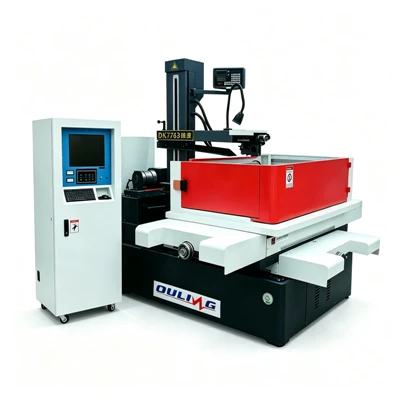
First, core to any parts EDM DR is physical infrastructure redundancy, but not the generic “buy a backup machine” kind. EDM machines don’t run on a flip of a switch; each has thousands of custom parameters tied to the specific part, from wire feed speed to spark gap voltage. A backup machine that’s not set up to match a client’s exact job will produce scrap, not parts. Our first step was zoning our facility into two separate, power-isolated production blocks. Block 1 is our primary EDM floor, with 7 core machines dedicated to high-volume, time-sensitive jobs. Block 2, which was once a storage and office annex, now has 4 secondary EDM machines, all pre-calibrated to our most common part families: titanium aerospace brackets, stainless steel medical implant cores, and aluminum automotive fuel injectors. What makes this work is the redundant power feed—we didn’t just tap into the same grid for Block 2; we have a 50kW backup generator dedicated exclusively to Block 2, and we test it every two weeks, not just during quarterly maintenance. Last quarter, a grid substation 3 miles out went down for 3 hours, and Block 1 lost power, but Block 2 kept running 90% of our backlog without missing a beat. We also upgraded our dielectric fluid systems to be redundant too: each block has its own filtration and chiller units, and a smart sensor system that auto-diverts fluid from one block to the other if a filter fails. Dielectric fluid is non-negotiable—if it’s contaminated with metal shavings, sparks don’t fire correctly, and you get a part that’s off by 0.001mm, which is catastrophic for medical parts. This year, we had a minor filter leak in Block 1, and the system auto-shifted the fluid supply to Block 2 before any parts were compromised; that saved us $15k in scrap and a potential recall fee from a medical device client.
Next, data disaster recovery is where most EDM suppliers drop the ball, and where I saw the biggest risk pre-2022. For years, we stored EDM program files, which are essentially 3D geometry instructions for the machine, on a local server. In 2021, a server crash corrupted 17 program files for a client’s custom hip implant; we had to reverse-engineer the parts from old paper blueprints, which took 72 hours and made that client consider switching to a competitor. That experience led us to build a three-tier data DR system specific to EDM. First, all active program files are stored on two local servers, one in Block 1 and one in Block 2, updated every 15 minutes. Second, we use a cloud-based backup system, but not a generic one—we use a manufacturing-specific cloud backup that encrypts files and retains 12 months of version history, so if we edit a program and accidentally save a bad version, we can pull the original from 24 hours prior. Third, we have an offline, air-gapped backup of all program files, stored in a fireproof safe in our office, just in case both local and cloud backups are compromised in a major event like a building fire or flood. We also test data recovery every month: last month, our IT team simulated a ransomware attack that locked the Block 1 server, and we were able to pull all active program files from Block 2’s server and the cloud in 12 minutes—fast enough that we didn’t delay a $500k automotive order. For EDM, data isn’t just a file; it’s the recipe for a part, and if that recipe is lost, you can’t make the part—no matter how many machines you have.
Another critical, often overlooked part of EDM DR is skilled labor redundancy. EDM operators aren’t just machine tenders; they’re technicians who adjust parameters, troubleshoot spark gaps, and recalibrate machines mid-run. When I was new in this business, I had three operators, all based on the primary floor. If one got sick, we’d have to delay jobs, and if two were out, a disaster. Now, we cross-train every operator on all EDM machines, both primary and secondary, and we have two backup operators on call 24/7 for emergency situations. We also have a dedicated EDM calibration technician who works across both blocks, so if a machine’s axis alignment is off, that tech can fix it on either floor. Last year, during a snowstorm that closed roads for 36 hours, two of our primary operators couldn’t get to work, but three cross-trained secondary operators and one on-call technician ran all our jobs out of Block 2 without missing a single delivery. We also keep a rotating pool of certified contract EDM operators on retainer, for events where a larger outage requires extra hands; we’ve never had to use them, but the peace of mind is worth the $1,200 monthly retainer. Unlike generic manufacturing, where a temp worker can run a pre-programmed machine, EDM operators need specific knowledge to adjust parameters for exotic materials like Inconel, which is common in aerospace parts. Cross-training isn’t optional here—it’s a core DR step.
We also built a client-facing DR communication plan, which is just as important as internal plans. I’ve seen competitors drop the ball here: during a 2023 hurricane, a parts EDM supplier I work with lost power for 5 days, and they only notified their clients 3 days in, leaving clients to source emergency parts elsewhere. Our plan is clear: if we have an outage that will delay a job more than 2 hours, we have a pre-written notification that goes to our account manager, who contacts the client within 1 hour of the outage being confirmed. We also share real-time updates, and if we need to rerun a job on Block 2, we send a photo of the machine running the exact part, the updated delivery time, and a detailed breakdown of the adjustments we made to ensure quality. Last summer, a tornado warning knocked out power to a neighboring facility, and we anticipated a 12-hour outage in Block 1; we notified our top aerospace client within 45 minutes, reran their 10-part job on Block 2, and sent them daily progress updates—they didn’t cancel a single order, and actually increased their volume with us by 15% that quarter. Transparency isn’t just good customer service; it’s part of DR, because clients are far more willing to work with you through a crisis if you keep them in the loop.
Even with all these plans, we still test them rigorously, because a DR plan that works on paper doesn’t work in a real crisis. We do four types of tests every quarter: first, a power outage test, where we simulate a grid outage and switch all critical operations to our generator and Block 2 to ensure no downtime. Second, a data recovery test, where we randomly corrupt a program file and recover it from the offline backup to confirm it’s intact. Third, a labor redundancy test, where we schedule an operator to work a machine they’re not assigned to, to ensure they can run it correctly. Fourth, a full DR simulation, where we simulate a major event like a building fire or flood, and walk through every step: which jobs go to secondary machines, which data is recovered first, which clients are notified, and how we ramp up production. Last year, we did a full simulation and found a gap: we didn’t have a plan for storing raw materials if our primary material warehouse is compromised. We fixed that by setting up a small secondary material storage in Block 2, with extra stocks of titanium, stainless steel, and aluminum, so we don’t have to wait for materials to arrive from a third-party warehouse during a crisis. That gap cost us a 2-hour delay in the simulation, but catching it before a real disaster was a win.
Let’s be clear: DR plans for parts EDM aren’t one-size-fits-all. A medical parts EDM supplier has way stricter requirements for traceability and precision than a low-volume custom parts shop, and an automotive parts EDM supplier has higher volume, so their DR plans prioritize speed over the ultra-tight tolerances needed for implants. Our plans are tailored to our client base: 60% aerospace, 25% medical, 15% automotive. If you’re a parts EDM shop that only works on small custom projects, you don’t need a 4-machine secondary floor, but you do need a backup machine, redundant data storage, and cross-trained operators. If you’re high-volume aerospace, you need the zoning and generator setup we have. The key is to map your risks specific to EDM: what happens if a power surge fries your power supply? What if your server crashes? What if your lead operator quits or gets sick? EDM parts take days, sometimes weeks, to make once you have the program and machine set up—there’s no “make it in an hour” backup. That’s why our DR plans aren’t afterthoughts; they’re integrated into our daily operations, not just something we dust off once a year.
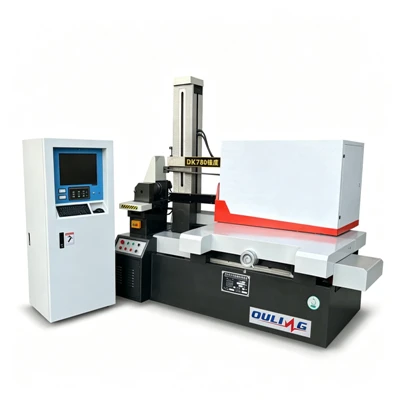
Over the past two years, these plans have saved us from three near-catastrophes: the grid substation outage, the tornado warning, and the snowstorm. They haven’t just saved us money—they’ve built trust with our clients, which is the only currency that matters in this industry. If you’re in the market for a parts EDM supplier with a tested disaster recovery plan, I encourage you to reach out to our procurement team to discuss your specific part needs, timelines, and contingency requirements. We work with clients to align our DR plans with their production schedules, so you never have to worry about missed delivery deadlines or compromised part quality.
Parts EDM References
- International Organization for Standardization (ISO) 9001:2015, Quality Management Systems – Requirements for Medical Device and Aerospace Manufacturing
- Society of Manufacturing Engineers (SME), 2023 Report on Precision EDM Production Resilience
- National Institute of Standards and Technology (NIST), Special Publication 800-34, Contingency Planning Guide for Information Technology Systems
- Electrical Discharge Machining (EDM) Manufacturers Association (EDMMA), 2022 Best Practices for Manufacturing Continuity in High-Precision EDM Operations
Taizhou Ouling CNC Equipment Co., Ltd.
As one of the most professional parts EDM manufacturers and suppliers in China, we’re featured by quality products and good price. Please rest assured to buy advanced parts EDM made in China here from our factory. Welcome to contact us for quotation.
Address: No. 9 jingang Road, Yangzhou City Jiangsu Province, China
E-mail: 574751243@qq.com
WebSite: https://www.oulingedm.com/
