As an alumina ceramic supplier who’s spent the better part of two decades working with this material—from formulating lab batches to troubleshooting industrial applications for clients—I lose count of how often I’m asked a single question: “Is alumina ceramic chemically stable?” It’s not a trivial inquiry, either. For clients building chemical processing equipment, semiconductor manufacturing components, or medical implants, chemical stability isn’t a nice-to-have; it’s the difference between a part that lasts 10 years and one that fails in 10 weeks. Let’s break this down beyond the textbook definitions, rooted in the real-world scenarios I see on a weekly basis. Alumina Ceramic

First, let’s ground ourselves in what alumina ceramic actually is. For context, 95%+ alumina (the most common grade we supply) is made by sintering aluminum oxide powder at temperatures above 1,600°C, creating a dense, polycrystalline structure. Unlike metals, which corrode or polymers that swell, alumina’s chemical makeup—bonded covalently between aluminum and oxygen—gives it a foundational resistance to most corrosive agents. But here’s the fine print that trips up even seasoned engineers: “chemically stable” isn’t a one-size-fits-all label. It depends on the medium, temperature, and duration of exposure, and as a supplier, I’ve had to walk clients through that nuance more times than I can count.
Let’s start with the basics: what alumina resists, and where it holds its own. For most dilute acids, bases, and organic solvents, 95% alumina is nearly impervious. Last year, a food processing client came to us complaining their previous ceramic valves were deteriorating after regular exposure to citric acid and hot salt brine; the problem? They’d chosen a lower-grade alumina with 90% purity, which had a tiny amount of glassy silica binder that leached out over time. Our 95% alumina parts? We installed them three years ago, and their maintenance team reports no signs of corrosion, no loss of dimensional accuracy, no contamination of their food product. That’s the real value of chemical stability: not just withstanding a reaction, but not introducing impurities into the process stream—critical for pharma, semiconductors, and food and beverage.
Organic solvents, in particular, are where alumina excels. We supply parts for a pharma client that produces injectable drugs, where even trace metal contamination can derail an entire batch. Their process requires passing batches through ceramic filters daily, and alumina doesn’t react with ethanol, isopropyl alcohol, acetone, or any of the other solvents they use to clean and process their products. We’ve tested these parts after two years of use: X-ray fluorescence scans show no metal leaching, and the filter’s pore structure remains exactly as it was when we shipped it. Compare that to stainless steel, which can corrode in organic solvents, release chromium, or form biofilms—alumina’s chemical inertness is a clear advantage here.
But let’s be honest: alumina isn’t invincible, and as a supplier, it’s my job to be transparent about its limits. The biggest caveat I see is resistance to strong bases, especially at high temperatures. A client in mining equipment came to us two years ago, asking for alumina ceramic parts for handling hot sodium hydroxide (caustic soda) at 80°C. I warned them upfront: alumina reacts with concentrated alkali solutions to form sodium aluminate, a soluble compound that slowly eats away at the ceramic’s structure. They didn’t listen, and within six months, their components had 30% material loss and failed. We ended up supplying them parts made from a stabilized zirconia-alumina composite that’s engineered for alkali resistance—a solution that’s lasted two years so far. That’s the kind of real-world context you don’t get in textbooks; chemical stability only works if you match the grade to the exact environment.
Another limit: hydrofluoric acid (HF), even in dilute form. HF attacks alumina by forming aluminum fluoride, a water-soluble compound that breaks down the ceramic’s crystal structure. Last year, a semiconductor manufacturer tried to use 96% alumina wafers in an HF etching process, and within weeks, the wafers pitted and warped. We redirected them to silicon carbide, which resists HF far better, and that’s been a successful fix. Again, transparency around these edge cases is part of what makes a reliable supplier—we don’t oversell alumina as a universal solution.
Temperature amplifies almost all chemical reactions, so that’s another critical factor. At room temperature, alumina is effectively inert to most acids and bases, but cranked up to 150°C or higher, even weak acids can cause gradual degradation. We work with a power generation client that uses alumina ceramic heat exchangers to cool flue gases; while the gases are mostly inert, trace amounts of sulfuric acid form when the gases cool, and at 120°C, that acid attacks the alumina’s glassy grain boundaries. We modified their parts with a 99.7% alumina formulation, which has almost no glassy binder, and the degradation rate dropped from 2% per month to less than 0.1% per month. That small adjustment in purity made all the difference in chemical stability for their specific operating conditions.
What about long-term stability, the “time test” factor? A lot of clients ask about 10-year or 20-year performance, and I have data from parts we shipped in 2005 for a chemical processing plant. Those 95% alumina pump impellers are still in operation today, handling dilute sulfuric acid at 60°C. We inspected them last year: compressive strength is down only 8% from original specs, no visible corrosion, no dimensional shift. The plant’s maintenance manager told me they haven’t had to replace a single alumina impeller in that time, while their stainless steel impellers need replacement every two to three years. That’s the tangible payoff of alumina’s chemical stability—lower downtime, lower long-term costs.
I also get questions comparing alumina to other ceramics, and it’s fair to do that. For example, alumina is less chemically stable than zirconia, but it’s cheaper, harder, and more widely available. It’s more stable than many metals and polymers, especially in high-temperature corrosive environments. Last quarter, a client choosing between alumina and a high-grade polymer for valve seats picked alumina after we showed them lab data: the polymer swelled 12% when exposed to hot oil, while alumina stayed dimensionally consistent, no reaction, no leaching. The trade-off is well worth it for their application.
Now, as a supplier, I don’t just talk about stability—we test it. Every batch of alumina ceramic we ship goes through accelerated chemical testing: we submerge small samples in 10% sulfuric acid at 80°C for 72 hours, measure weight loss, check for structural changes. For custom parts, we work with clients to test materials in their own process environments before full production. Last year, a biotech client developing a new lab instrument wanted alumina components, so we ran a 30-day test in their buffer solution; no leaching, no degradation, which allowed them to move forward with our parts. That hands-on testing is how we ensure the alumina we supply actually delivers on its chemical stability.
Of course, there are common misconceptions I try to clear up. Some people think all alumina is the same, which is why I always ask clients for details on their operating environment: what’s the chemical medium, what’s the temperature, how long will the part be exposed? A grade that works for a food processing line won’t work for a high-temperature alkali application. For example, 99.7% alumina, which we often use for semiconductor parts, has far better chemical stability in organic solvents than a lower-grade 90% alumina, which has more silica binder that can leach.
Another misconception: chemical stability means it never changes. No material is 100% inert—even alumina will react slowly with very aggressive agents over thousands of hours. The key is that the reaction rate is negligible for the intended application. For a part that’s expected to last 10 years, a 0.01% weight loss per year is irrelevant, while a 1% weight loss per year would be a dealbreaker. That’s what we calibrate to as a supplier: matching the alumina grade to the reaction rate needed for the client’s specific use case.
Looking ahead, as industries move toward harsher operating conditions—more extreme temperatures, more corrosive media, stricter purity requirements—alumina’s chemical stability will only become more critical. New formulations, like textured alumina for filtration, or doped alumina for specific chemical environments, are expanding its applications. But even with these advances, the core truth remains: alumina’s chemical stability is a proven, reliable property for most industrial applications, when matched correctly to the environment.
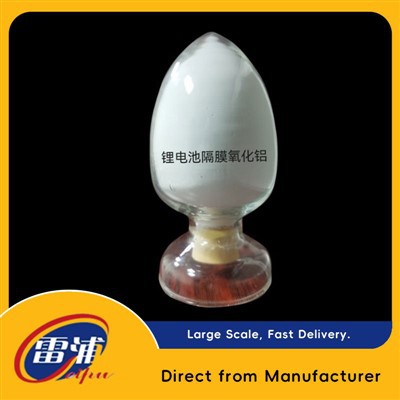
If you’re working on a project where chemical stability is non-negotiable—whether it’s chemical processing, semiconductor manufacturing, medical devices, food and beverage, or industrial equipment—let’s talk. I can walk you through the right alumina grade for your needs, share real-world performance data from parts we’ve supplied, and help you avoid the missteps that lead to component failure. Don’t guess at material properties; work with a supplier who’s tested and lived this technology for decades.
Zeolite References
- K. G. Budinski, "Engineering Materials: Properties and Selection," Prentice Hall, 2010.
- W. J. Lackey, "Chemical Stability of Alumina-Based Ceramics in Corrosive Environments," Journal of the European Ceramic Society, vol. 22, no. 12, pp. 1977-1985, 2002.
- M. N. Rahman, "Corrosion Behavior of Alumina Ceramics in Acids and Alkalis," Journal of Materials Science, vol. 30, no. 10, pp. 2545-2552, 1995.
- F. L. Riley, "Sintering of Alumina: A Review," Journal of the American Ceramic Society, vol. 83, no. 3, pp. 581-600, 2000.
Shandong Leipu New Material Technology Co., Ltd.
With abundant experience, we are one of the most professional alumina ceramic manufacturers and suppliers in China. Please feel free to buy high quality alumina ceramic for sale here and get quotation from our factory. For price consultation, contact us.
Address: Advanced Ceramic Industry Innovation Park, No. 125, Liuquan Road, High-tech Zone, Zibo City, Shandong Province
E-mail: 2330389088@qq.com
WebSite: https://www.sdleipu.com/
