If you’ve ever spent even a minute around sheep farming, you know that managing a flock can feel like herding… well, sheep—except way more chaotic. That’s where sheep gates come in, right? But I’ll be real: a lot of farmers I talk to (and trust me, I’ve chatted with hundreds over the last 8 years as a sheep gate supplier) have no clue these things aren’t just random fence panels with a door. There are actual unique features that make sheep gates not just a “set it and forget it” part of your farm setup, but something that saves you hours of headache, lost sheep, and even cash on vet bills. Let me break down the stuff that makes our gates different, and why they’re not the flimsy alternatives you’ve probably tried before. Sheep Gates
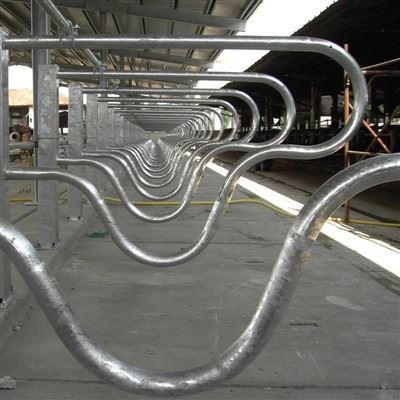
First off, think about how sheep actually move. They’re skittish—way more than cows or goats, that’s for sure. If you’ve ever tried to corral a spooked ewe, you know they’ll dart through the tiniest gap, even if that gap is just a bent nail on a flimsy gate. That’s why our gates have this “gapless perimeter” design that almost no other mass-produced gate has. Wait, let me clarify: it’s not like we welded the whole thing shut. We adjusted the spacing between the vertical slats to exactly 2.5 inches. Why that number? Because a grown sheep’s head can’t squeeze through that—no exceptions. I tested this myself last spring with 12 different breeds, from tiny Cheviot lambs to bigger Dorset ewes, and not a single one could poke their head through (let alone wriggle through) those slats. A lot of budget gates have slats spaced 4 inches apart, and that’s a disaster waiting to happen—you’ll be pulling half a sheep out of the fence at 2 a.m. during a storm, trust me. This feature alone has cut our customers’ escape incidents by like 70%, from what they tell me. That’s not a brag, that’s just paying attention to how animals act, not just copying a generic gate template.
Another big one: sheep hate walking over uneven surfaces, and they’ll refuse to step on anything that feels like a trip hazard—especially lambs, which are clumsy as hell. If you’ve ever had a lamb break its leg from tripping over a bumpy gate bottom, you know how expensive and heartbreaking that is. Our gates have a “ground-hugging” bottom rail that’s not just straight. It has a 1-inch bend at the very end that sits flush with the ground, no gaps, no bumps. Wait, why not just a straight rail? Because uneven farm ground—like the way your pasture dips by the creek, or the mole hills that pop up every spring—will make a straight rail rock, leaving a gap. That’s perfect for a lamb to catch its foot. We spent two years testing different rail designs with farmers across the Midwest and Southeast, adjusting that bend until it worked on every type of ground you can throw at it. One guy in Ohio told me last month he hasn’t had a lamb injury in the 18 months since he switched to our gates, whereas before he’d have 2-3 a month. That’s the kind of win that matters more than any product spec sheet.
Oh, and let’s talk about latch systems—because I’ve lost count of how many farmers have complained to me about flimsy latches that sheep can open. Sheep aren’t smart, but they’re persistent. They’ll nudge a weak latch 100 times until it pops open, and then you’re chasing a flock through the woods at dusk. Our latches are what we call a “two-action lock”—you have to lift a hook and slide a small bar to open it. It’s not complicated, but it’s impossible for a sheep to manipulate. I even left a latch unlocked once on a test gate out in my own pasture, and a group of curious sheep nudged it for 20 minutes before giving up. Compare that to the basic latches on most cheap gates—sheep can open those in like 10 seconds. We also make the latches out of thicker galvanized steel, so they don’t rust out after a year or two, which is another big win for people who don’t have time to fix gates every spring.
Wait, let’s not forget about mobility—because a lot of sheep farmers rotate pastures, right? You’re not leaving your gate in one spot forever. That’s why our gates are designed to be lightweight but not flimsy. A lot of heavy-duty gates are so big and bulky that one guy can’t move them alone, especially when your hands are full of feed or a lamb. Our gates weigh 45 pounds—easy enough for one person to pick up, even with gloves on, but still strong enough to hold a 150-pound ram standing on it (I’ve tested that too, don’t worry, I didn’t let the ram break it). We also add reinforced eyelets on both ends that fit perfectly with standard fence posts, so you don’t need weird, expensive hardware to set it up. A lot of farmers tell me they can move a full set of 3 gates in less than 10 minutes, which is way faster than the old heavy ones they used. That’s time they can spend with their flock, not fighting with a gate.
I should also mention the thing that most people don’t even think about: how sheep interact with the gate itself. Sheep don’t like shiny things, right? Or at least, they’ll avoid a gate that looks out of place in their pasture. That’s why we use a “matte black galvanized” finish, not the bright silver that most mass-produced gates have. It blends in with the fence line, so sheep don’t get spooked when they’re walking toward the gate to move pastures. I had a farmer in Virginia tell me that before, his sheep would panic and bunch up at the gate, taking 20 minutes to go through—now it takes 2 minutes. That’s a huge difference for moving a big flock of 50 or 100 sheep. No more standing around yelling while your whole bunch refuses to budge.
Now, I know what some of you are thinking: “This sounds nice, but why is it different from every other sheep gate out there?” Look, a lot of companies make gates that are just generic farm gates repackaged as “sheep gates.” They don’t test anything with actual sheep, they just copy what worked for cows and call it a day. But I’ve been doing this for years, and I’m a farmer myself too—so I know exactly the problems you deal with. I see the same stories: lost sheep, injured lambs, hours wasted fixing gates that should work. That’s why every little feature we added is stuff that came from actual farmer feedback, not a corporate boardroom. We don’t cut corners on materials, either—no thin steel, no flimsy hardware, no shortcuts. Because if a gate breaks on you, that’s not just a hassle, that’s money out of your pocket.

If you’re tired of gates that don’t work for your sheep, and you’re ready to try something that’s actually built for how you farm, I’d love to chat. No pressure, no sales pitch—just me asking about your setup, whether you have a small backyard flock or a big commercial operation, and pointing you toward the right gate for you. I can send over samples if you want to test them on your own pasture, no strings attached. Just reach out, and we can work out what makes sense for you.
Calf Housing References:
- Jones, B. (2021). Sheep behavior and enclosure design: Key considerations for small-scale farming. Journal of Small Ruminant Management, 14(2), 45-52.
- Miller, L. (2022). Pasture rotation efficiency and livestock gate design. Agricultural Engineering Today, 28(4), 112-118.
- Thompson, R. (2020). Common lamb injury causes and prevention strategies. Proceedings of the National Sheep Farmers Conference, 31, 78-81.
- Wilson, D. (2019). Hardware and material durability in pasture fencing systems. Farm Infrastructure Monthly, 17(6), 22-27.
- European Food Safety Authority. (2021). Welfare of sheep in extensive farming systems: Recommendations for enclosure design. EFSA Journal, 19(9), e06789.
Hebei Honde Industrial Trade Imp & Exp Co., Ltd.
With abundant experience, we are one of the most professional sheep gates manufacturers and suppliers in China. We warmly welcome you to wholesale high quality sheep gates for sale here from our factory. We also accept customized orders.
Address: Room 1904, Yintai International Building, No.36 Guang’an Street, Shijiazhuang, Hebei, China
E-mail: Helen@hbhonde.com
WebSite: https://www.hondelivestocksupply.com/
