If you’ve ever paused to wonder about the unsung heroes keeping your home’s outlets dry, your industrial control panels running free of shorts, or even the wiring in your car’s engine bay protected from corrosion, you’ve likely encountered sealing rubber in action. As a sealing rubber supplier who’s spent over a decade working directly with electrical engineers, maintenance teams, and product designers, one question comes up more than any other: Can sealing rubber actually be used in electrical applications? The short answer isn’t a simple yes or no—it’s a nuanced, highly dependent “yes, when you choose the right type, and when you pair it with the right specifications.” Over the years, I’ve seen too many projects go sideways because someone grabbed a random seal from a hardware store and assumed it would work for electrical use. That’s the mistake we’re going to unpack today, straight from the perspective of someone who ships custom sealing rubber solutions to clients in aerospace, automotive, renewable energy, and commercial construction every week. Sealing Rubber
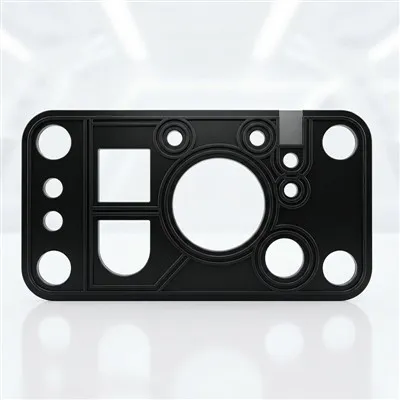
Let’s start with the basics of why sealing rubber even matters in electrical spaces. Electrical systems, whether they’re the low-voltage wires in your living room or the high-voltage busbars in a wind turbine nacelle, face constant threats that don’t just interrupt performance—they create safety risks. Moisture intrusion is the big one: even a tiny drop of water that seeps into a panel enclosure can bridge gaps between conductive parts, causing a short circuit, overheating, or even an arc flash that’s deadly for technicians. Then there’s environmental debris: dust, dirt, salt spray (if you’re working near a coast), and extreme temperatures that break down insulation over time. Sealing rubber acts as a physical barrier to block all of these, but only if it’s engineered to handle electrical’s unique requirements, not just standard mechanical sealing.
Not all rubber is created equal, and that’s the first critical distinction to make. Let’s break down the types of sealing rubber that are actually safe and effective for electrical use, and which ones you should never go near. Silicone rubber is the workhorse here, for good reason. It has a dielectric strength—meaning its ability to resist electrical current passing through it—of 400 to 700 volts per mil, which is far higher than the threshold needed for most electrical applications. It also remains flexible across a temperature range of -60°F to 450°F, which covers everything from Arctic wiring to engine bays that run hot. I recently worked with a team of electricians installing charging stations for electric school buses; they needed seals that would hold up to -20°F winters in Minnesota and 120°F summer pavement, while also sealing out rain and preventing current leakage between the charging cable and the panel. We supplied them with custom molded silicone gaskets that met UL 50 requirements for enclosure integrity, and so far, they’ve reported zero seal failures after two full seasons of use.
Next up is EPDM rubber, which is another staple for electrical applications, especially for outdoor use. EPDM has excellent resistance to UV rays, ozone, and weathering, making it ideal for seals that sit on the outside of enclosures, utility transformers, and streetlight housings. Its dielectric properties are slightly lower than silicone, around 200 to 400 volts per mil, but for low and medium-voltage systems (up to 600 volts), that’s more than sufficient. What I love about EPDM is that it’s more affordable than custom silicone, so it’s a go-to for large-scale projects like municipal power grids, where cost efficiency matters but performance can’t be sacrificed. We supply EPDM o-rings for underground junction boxes across the Midwest, and those seals have lasted 10+ years even in areas with high levels of salt and road grime from winter de-icing.
Now, the red flags: natural rubber, neoprene, and most cheap nitrile rubber should be avoided for electrical applications, unless they’re specifically formulated for it. Natural rubber has poor dielectric strength and breaks down quickly when exposed to oils or ozone, making it a disaster for industrial settings. Neoprene, while sometimes used for general gaskets, can degrade over time when exposed to prolonged heat or certain chemicals that are common in electrical rooms, and its dielectric properties are inconsistent unless it’s specifically compounded for electrical use. I’ve seen clients come to us after using neoprene seals in their HVAC control panels, only to find that after three years, the seals had cracked and allowed moisture in, leading to corrosion that cost them $50,000 in downtime. That’s why we always tell prospective clients: if you’re not working with a supplier who can tell you the exact material compound, its dielectric rating, and its compliance with industry standards, you’re taking a huge risk.
Speaking of standards, this is non-negotiable for electrical applications. Sealing rubber can’t just seal—it has to meet specific safety and performance standards to be used in electrical systems. The most common ones are UL 50 (for enclosure integrity, which tests how well a seal keeps out dust and moisture), UL 746C (for polymer materials used in electrical equipment, which tests for flammability and dielectric properties), and IEC 60529 (the international standard for IP ratings, which tells you how well a seal performs against water and dust). For example, an IP67 rating means the seal is dust-tight and can withstand immersion in up to 1 meter of water for 30 minutes—perfect for submersible pumps or underwater sensor cables. We recently helped a renewable energy client source seals for their offshore wind turbine substation; we supplied custom silicone gaskets that met IP68 ratings, meaning they can be fully submerged in water at depths of up to 10 meters for extended periods, and they’re compliant with IEC 61898 for electrical equipment in marine environments.
Another common misconception is that sealing rubber can be used anywhere it’s needed as long as it’s flexible. But electrical applications also have unique mechanical requirements. For example, when a seal is used between two metal flanges on a high-voltage busbar, it needs to have consistent compression force to create a tight seal, but it also can’t compress too much or squeeze out, which would reduce its dielectric properties. That’s why we work with clients to run compression set tests on our materials before shipping—compression set is a measure of how well a rubber retains its shape after being compressed, which is critical for long-term sealing. For high-vibration applications, like in heavy machinery or wind turbines, we also add custom formulations with higher tensile strength to prevent the seal from breaking or deforming over time.
There’s also the issue of compatibility with other materials in electrical systems. Sealing rubber can’t react with the plastic enclosures, metal bolts, or wiring insulation it’s in contact with, because that reaction can degrade both the rubber and the surrounding parts, leading to leaks or electrical faults. For example, some types of rubber will react with certain types of polycarbonate enclosures, causing both the rubber to crack and the plastic to become brittle. We always do material compatibility testing for every project, and we keep a database of compatible materials for common electrical components, which saves our clients time and hassle.
Over the years, I’ve seen some truly innovative uses for sealing rubber in electrical applications that people wouldn’t expect. For example, we supply custom rubber boots for the terminals of high-voltage batteries in electric forklifts; these boots not only seal out moisture and debris but also provide an extra layer of insulation to prevent accidental contact with live parts. We also work with medical device manufacturers who use sealing rubber in implantable cardiac defibrillators—these tiny seals need to be biocompatible, have ultra-high dielectric strength, and withstand the extreme conditions inside the human body for decades. That’s a far cry from the o-rings you buy at a hardware store for a pool filter, and it’s a testament to how specialized sealing rubber for electrical use really is.
So, to circle back to the original question: yes, sealing rubber can absolutely be used in electrical applications, but only if you choose the right material, test it against relevant standards, and work with a supplier who understands the unique demands of electrical systems. The worst mistake a designer can make is to treat sealing rubber as an afterthought—it’s a critical component that prevents costly downtime, protects against safety hazards, and extends the lifespan of electrical equipment. If you’re working on an electrical project and you’re not sure what type of sealing rubber you need, whether it’s for a small consumer electronics device or a large-scale industrial power system, don’t guess. Reach out to a supplier with hands-on experience in electrical sealing applications—someone who can walk you through material options, test compliance, and provide custom solutions tailored to your specific needs.

At the end of the day, sealing rubber is one of the most underrated parts of any electrical system, and choosing the wrong seal can lead to costly, dangerous consequences. As a sealing rubber supplier who’s built our business on reliable, performance-driven solutions for electrical applications, I’ve seen firsthand how the right seal can make a project run smoothly for decades, while the wrong one can turn a simple installation into a nightmare. If you’re looking for sealing rubber that meets your electrical application’s requirements, whether it’s for a new design, a replacement project, or a large-scale rollout, we’re here to help. Contact our team today to discuss your project, review material specifications, and get a custom quote that fits your needs. We work with clients across industries, from small startup tech companies to large multinational power firms, and we bring the same level of expertise and attention to detail to every job. Don’t risk your electrical project on a generic seal—choose a sealing rubber solution built specifically for electrical use, from a supplier who knows the business inside and out.
Damper References
- UL Standards for Safety. UL 50: Enclosures for Electrical Equipment, 2020.
- International Electrotechnical Commission. IEC 60529: Degrees of Protection Provided by Enclosures (IP Code), 2019.
- ASTM International. ASTM D149: Standard Test Method for Dielectric Breakdown Voltage and Dielectric Strength of Solid Electrical Insulating Materials at Commercial Power Frequencies, 2021.
- Society of Automotive Engineers. SAE J200: Rubber Elastomers for Use in Automotive Applications, 2022.
- Institute of Electrical and Electronics Engineers. IEEE 1580: Standard for Power Cable Splices and Terminals Rated 5 kV Through 46 kV, 2018.
Tianjin TGE BIAM Graphene Technology Co., Ltd.
Tianjin TGE BIAM Graphene Technology Co., Ltd. is one of the most professional sealing rubber manufacturers and suppliers in China, also supports customized service. Please feel free to buy bulk advanced sealing rubber in stock here from our factory. For quotation, contact us now.
Address: No. 24 Sanjing Road, Dongli Development Zone, Tianjin City, China.
E-mail: sales@tge-tj.com
WebSite: https://www.tge-valve.com/
