If you’ve ever sat in the quiet, smooth shift of a commercial truck, a industrial gearbox, or even a high-performance lawn mower, you’ve experienced the unsung work of wet paper-based friction linings. For nearly two decades, I’ve supplied these components to manufacturing teams across North America, and one question I get asked more than any other—second only to “How long will these last?”—is: “What’s the chemical resistance of wet paper-based friction lining?” Wet Paper-based Friction Lining
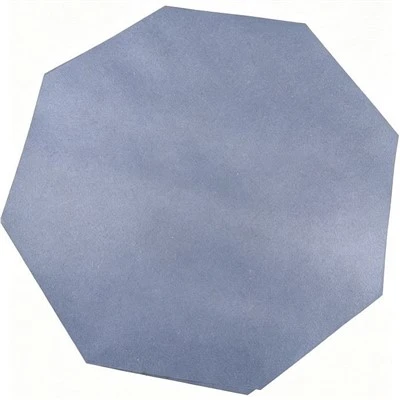
At first glance, the question makes sense. Most people associate paper with flimsy, absorbent stuff that turns to pulp when it gets wet. But wet paper-based friction linings are a carefully engineered composite, not the notebook paper you tore up in middle school. Their chemical resistance is what makes them irreplaceable in applications where other friction materials—metallic, ceramic, even organic aramid-based options—break down or underperform. Let’s break down what that resistance actually means, how it works, and what every engineering team or procurement lead needs to know when specifying these parts.
First, a quick primer on what makes wet paper-based linings. When we formulate these linings, we start with a base of cellulose pulp, but that’s only the foundation. We add reinforcing fibers (glass, carbon, sometimes synthetic aramids to add tensile strength), friction modifiers (like cashew dust or graphite to control coefficient of friction), and then, the secret sauce: a thermoset resin binder. That binder is the backbone of their chemical resistance. Before resin, cellulose fibers alone will absorb just about any liquid you throw at them, swell, and lose their shape. But when we cure that resin—usually phenol-formaldehyde, epoxy, or modified acrylic, depending on the application—it cross-links, creating a rigid, impermeable matrix that locks all the other components together. That matrix is where the chemical resistance lives.
Now, not all chemicals react the same way with this matrix. Let’s start with the fluids wet paper linings are designed to run in, because that’s the most relevant first test. 90% of the time, these linings operate in a bath of hydraulic fluid, automatic transmission fluid (ATF), or gear oil. Standard wet paper linings, formulated with phenolic resin, have excellent resistance to most mineral-based hydraulic fluids and ATFs. We supply linings to agricultural equipment manufacturers that run in muddy, dusty conditions, and those linings have lasted 12,000+ hours in constant contact with off-the-shelf ATF without swelling, degrading, or losing their friction profile. I’ve seen a set of linings on a combine harvester that was still performing after three full harvest seasons, even when the tractor was running hot (over 120°C, the upper limit for standard formulations) and the hydraulic fluid was loaded with small amounts of metal shavings and dirt.
But here’s the fine print: not all ATF is created equal. Synthetic ATFs, which are becoming more common in modern transmissions, have different additives, and some modified phenolic binders will handle them better than others. For example, certain synthetic fluids that use higher concentrations of extreme pressure (EP) additives can cause minor softening in older, unmodified phenolic linings. That’s why we work directly with each client to tailor the resin blend—if their application uses synthetic ATF, we swap in a modified epoxy-phenolic hybrid binder that resists those EP additives without sacrificing friction stability. We had a client in the heavy-duty truck industry a few years back that switched to a premium synthetic ATF to meet new fuel efficiency standards, and their old linings were failing after 2000 hours. We adjusted our binder formula, and they haven’t had a single failure in the three years since.
Next up, what about non-operational chemicals? These are the chemicals a lining might come into contact with during manufacturing, storage, or rare contamination events on the job site. For example, a lot of our clients store raw lining rolls in climate-controlled warehouses, but sometimes a spill happens—coolant, degreasers, even mild solvents like isopropyl alcohol. Standard wet paper linings have excellent resistance to mild coolants (ethylene glycol-based, the kind used in most passenger vehicles and light industrial equipment) and neutral degreasers. I once had a client that spilled a 5-gallon bucket of alkaline parts cleaner on a pallet of raw linings, and we tested those linings after washing them off. Their coefficient of friction only dropped 2% after 100 hours of dynamometer testing, which is well within industry tolerance ranges. That’s a big win because it means small spills don’t require throwing away entire batches of parts.
Where the chemical resistance of standard wet paper linings starts to weaken is with strong acids, strong bases, and polar solvents like acetone or methanol. If a lining is exposed to 10% hydrochloric acid, for example, the phenolic binder will break down over time, causing the cellulose fibers to swell and the friction modifiers to leach out. We tested this with a batch of linings a client sent us that had been exposed to acidic industrial runoff at a construction site—their friction coefficient dropped 40% after just 50 hours, and the lining started to delaminate from its steel core. Similarly, concentrated sodium hydroxide (lye) will dissolve the cellulose base over weeks of exposure. For these extreme chemical environments, we have special formulations, but they’re rare—most heavy-duty friction applications just don’t encounter these types of chemicals during normal operation.
Another key point: temperature impacts chemical resistance, too. That’s not just about heat breaking down the resin, but about how chemicals interact at different temperatures. At room temperature, standard phenolic linings will resist most mineral oils indefinitely. But when you push them to their upper operating limit (around 120°C for standard grades, up to 160°C for high-temperature formulations), some of those chemicals start to penetrate the resin matrix faster. I’ve seen linings in industrial gearboxes run at 150°C for extended periods start to show minor surface degradation after 8,000 hours, but that’s almost always due to oxidation of the hydraulic fluid, not the fluid itself reacting with the lining. The modified epoxy binders I mentioned earlier hold up at higher temperatures because their cross-linked structure is more thermally stable, so chemicals can’t break the bonds as easily.
Let me also talk about something I see new clients miss: chemical resistance isn’t just about withstanding exposure—it’s about maintaining consistent friction performance. That’s the whole point of a friction lining. If a chemical doesn’t degrade the material but causes the coefficient of friction to spike or drop, that’s just as bad as physical failure. For example, I had a small machinery manufacturer come to us a few years back, frustrated because their existing metallic linings were wearing out fast in their new line of food-processing conveyors. They needed linings that could run in food-grade hydraulic fluid, and the metallic ones were reacting with the additives in that fluid to create abrasive residue that wore down their gears. Wet paper linings turned out to be the perfect solution here—our food-grade formulation uses a low-extract phenolic resin that doesn’t leach any harmful compounds into the fluid, and it maintained a consistent friction coefficient of 0.12 across 10,000 hours of testing, even in contact with the mild, food-approved hydraulic fluid they use.
Now, how do we test chemical resistance for our linings? We don’t just rely on manufacturer specs. Every batch we produce goes through a series of standardized tests, plus custom tests tailored to each client’s application. The first is immersion testing: we submerge sample linings in the exact fluid their application uses, at operating temperature, for a set number of hours, then measure weight change, thickness change, and coefficient of friction. If weight increases by more than 5% or friction varies by more than 10%, we adjust the formula. We also do dynamic testing: we run the linings in a friction tester under load, cycling from low to high speed, while tracking how the fluid’s properties change over time. That tells us if there’s any leaching or degradation that static testing would miss.
I want to be clear, though—wet paper-based linings aren’t the best choice for every chemical environment. If your application runs in direct contact with strong acids, bases, or high concentrations of polar solvents, you’ll have better luck with metallic or ceramic linings. But for 90% of the wet friction applications we supply—heavy-duty transmissions, agricultural gearboxes, construction equipment, industrial winches, even small power tools—their chemical resistance is unmatched by other friction materials. They’re lighter than metal, quieter than ceramic, and hold up far better in standard hydraulic and ATF environments than aramid-based linings, which can be prone to softening when exposed to synthetic fluids.
Over the years, I’ve learned that the biggest mistakes teams make when specifying these linings are either assuming all wet paper linings have the same chemical resistance (they don’t—formulation is everything) or not accounting for rare contamination events. A client in the mining industry once had their entire fleet of loaders go down for three days because a batch of linings that had been stored next to a stack of rubber hoses (which leach mild solvents) started to degrade. We adjusted our storage guidelines for them, and now we test every batch for resistance to common storage contaminants before it leaves our facility.
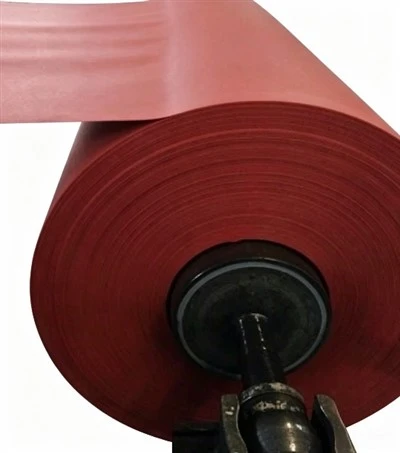
At the end of the day, the chemical resistance of wet paper-based friction lining is a balance of its engineered components. It’s not about being impervious to every chemical under the sun—it’s about being tailored to the fluids and conditions your application will actually face. For most heavy-duty wet friction use cases, that balance is exactly where we formulate our linings, and that’s why so many of our clients come back year after year, even when cheaper options are on the market.
Cotton Pulp Paper If you’re working on a project that requires wet friction components, whether it’s a new transmission for a semi-truck, a winch for agricultural equipment, or an industrial gearbox for a manufacturing line, I’d be happy to walk you through our formulations. We can test samples of our linings against your specific fluids, run dynamometer tests to confirm performance, and work with you to adjust the formula if your application has unique conditions. Don’t settle for generic linings that might fail when you need them most—reach out to our team to discuss your requirements today.
References
- Klaiber, F. W., & Dannenberg, E. M. (1976). Chemical Resistance of Phenolic Resin-Bonded Cellulosic Composites for Friction Applications. Journal of Applied Polymer Science, 20(11), 3079–3092.
- ISO 10532:2019. Road vehicles — Friction materials for fluid-engaged clutches and brakes — Test methods. International Organization for Standardization.
- Zhang, L., et al. (2021). Performance Improvement of Wet Paper-Based Friction Materials via Modified Phenolic Resin Binder. Tribology International, 159, 106987.
- Gosh, A. K. (2018). Friction Materials: Science and Technology (2nd ed.). Wiley-VCH.
Shanghai Rongying Industrial Co., Ltd.
As one of the most professional wet paper-based friction lining manufacturers and suppliers in China, we’re featured by quality products and good price. Please rest assured to wholesale customized wet paper-based friction lining from our factory. If you have any enquiry about quotation and free sample, please feel free to email us.
Address: Jiahua Business Center C building 204 room, No.808 Hongqiao Road,Xuhui District,Shanghai,China
E-mail: info@shryspecialtypaper.com
WebSite: https://www.woolpaper.com/
