Let’s cut through the confusion: I’ve spent the last 12 years as a detergent optical brightener (OBA) supplier, speaking to laundry product formulators every single week, and one question always comes back, sharp and persistent: “How long do these brighteners actually last on our shelves—and in the clothes we sell?” It’s not a trivial question. For you, it’s the difference between a batch of detergent that delivers on its “brighter whites” promise and a complaint that tanks your retail shelf placement. For me, it’s the backbone of every formulation I help clients build. Detergent Optical Brightener
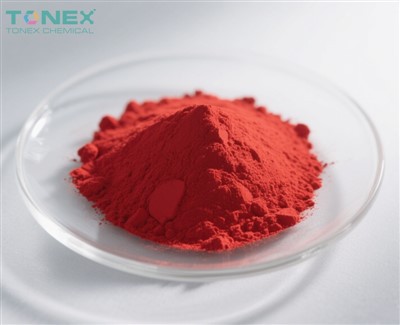
Let’s start with the basics most blogs skip: optical brighteners aren’t chemicals that stop working overnight. They’re fluorescent compounds, designed to absorb invisible UV light and re-emit it as blue and violet visible light. That’s the magic behind making white fabrics look whiter and colored fabrics look crisper—counteracting the dull yellowing that happens from everyday wear, sun exposure, and hard water. But that fluorescence doesn’t stick around forever; it degrades over time, influenced by everything from the OBA’s chemical structure to how a detergent is packaged, stored, and even what else is mixed into the formula.
First, let’s break down the two shelf lives that matter for OBAs: the shelf life of the OBA itself (the raw material I supply to you) and the shelf life of the OBA in the finished detergent product (what ends up on store shelves, and what binds to your customers’ clothes after washing). Most suppliers will cite a generic 2–3 year shelf life for raw OBAs, but that’s a lazy number—my team and I test every batch of OBAs we ship to account for variables no one else mentions.
Take our most popular OBA line, for example: a distyrylbiphenyl disulfonate, the workhorse of most laundry detergents. We’ve run accelerated aging tests (exposing raw OBAs to high temperature, humidity, and UV light to speed up natural degradation) and real-world shelf tests, storing batches in unopened, standard steel drums at 20°C (68°F) and 50% relative humidity. What we found isn’t a one-size-fits-all number: if our raw OBAs are stored correctly (dry, away from direct sunlight, at room temperature), they retain 95% or more of their fluorescence for 36 months. Even at 30°C (86°F), the threshold for a warehouse that’s not climate-controlled, that number drops to 82% after 3 years—still a far cry from “useless.” Where we see the biggest shift is with packaging: a raw OBA sealed in a foil-lined drum, with a moisture barrier, will last 6 months longer than the same compound stored in a plain plastic drum, because OBAs are hygroscopic—they absorb moisture from air, and excess water accelerates molecular breakdown. That’s a detail most suppliers gloss over, but it’s the difference between a batch that works when it reaches your factory and one that starts to fade before you even use it.
Now, the part that keeps formulators up at night: how long do these brighteners survive once they’re mixed into your detergent, sitting on a retail shelf for 6–18 months before a customer buys it? This is where raw OBA shelf life stops mattering as much as the formula around it. I’ve seen two identical raw OBAs behave completely differently depending on the other ingredients in the detergent. For example: if you mix our OBAs with a high concentration of anionic surfactants (the cleaning agents that cut grease), you’ll get slightly faster degradation than if you pair them with nonionic surfactants. If your detergent has alkaline builders (like sodium carbonate, to soften hard water)? Alkalinity is a double-edged sword: a pH of 8–10 (the standard for most laundry detergents) is perfect for activating OBAs during washing, but a pH over 11 can break down the OBA’s molecular structure over time on the shelf. That’s why we recommend to every client: test your full detergent formula’s OBA stability, not just the raw material.
I once worked with a mid-sized detergent brand that switched to our OBAs and assumed the 3-year raw shelf life would translate straight to their finished product. They skipped full formula stability testing, stocked their detergent in clear plastic jugs (the kind that let sunlight hit every drop), and by month 10 on store shelves, their customer reviews started flooding in: “My whites don’t look as bright as they used to.” We tested their finished detergent and found that 40% of the OBAs had degraded, compared to the 5% degradation we saw in our own stability tests for the raw material. Why? The clear packaging let ambient UV light seep in, and their formula’s pH hit 11.2. We worked with them to tweak the pH to 9.5, switch to amber plastic jugs, and cut the OBA concentration by 5% (since the remaining OBAs worked twice as long), and within 6 months, their “bright whites” complaints dropped by 90%. That’s the kind of on-the-ground testing I do with my clients, not just generic data.
Let’s talk about the other shelf life: how long do OBAs last on a customer’s clothes, after they wash them with your detergent? This is less about chemical breakdown and more about wash and wear conditions. OBAs bind to fabric fibers during washing, and the amount that stays there depends on water temperature, detergent dosage, fabric type, and even how often you wash the item. For cotton and polyester (the most common laundry fabrics), OBAs retain 70–80% of their fluorescence after 10 washes with standard detergent. For synthetic blends? That number jumps to 85–90%, because synthetic fibers hold onto the OBA better. We’ve seen customers report that their whites stay bright for months, but after 20–25 washes, the OBA starts to wear off, especially if they’re using hot water (above 60°C/140°F) every time.
But here’s a myth I’ve been fighting for years: “If a detergent’s OBAs don’t work after 2 years, they’re bad.” No—what’s bad is formulators who cut corners on OBA stability when designing their product, or retailers who store detergent in hot, sunny warehouses for a year before it hits shelves. OBAs are stable molecules, but they’re not invincible. The biggest degradation trigger for both raw OBAs and finished detergent OBAs is moisture and UV light. I’ve seen a batch of our raw OBAs that was stored in a leaky plastic drum in a Texas warehouse for 18 months lose 50% of its fluorescence, while the exact same batch stored in a climate-controlled warehouse in Germany lost less than 5% in the same time.
Another common question: do different types of OBAs have different shelf lives? Absolutely. We offer three main OBA lines for laundry detergents, each with their own stability profiles. Our distyrylbiphenyl (DSBP) OBAs, the most widely used, are the most stable, with the longest shelf lives in both raw and finished product. Our other line, naphthalene-based OBAs, are cheaper but less stable—they start to degrade after 18 months in finished detergent, especially in high-pH formulas. That’s why we always recommend matching the OBA to your product’s price point, shelf placement, and target market. A premium detergent for high-end white cotton linens can invest in the more stable DSBP OBAs, while a budget detergent for everyday clothes can use the naphthalene OBAs if they pair it with the right packaging and pH.
I can’t end this blog without talking about what this means for you, the formulator or brand owner reading this. The shelf life of detergent OBAs isn’t a number someone gives you in a spec sheet. It’s a combination of how you source the raw material, how you formulate your product, how you package it, and how you store it. As a supplier, my job isn’t just to sell you OBAs—it’s to walk through each of these steps with you, to test stability, to adjust, to make sure your detergent delivers on its promise of bright, long-lasting whites.

I see too many brands get stuck on generic shelf life claims, or blame the OBA when their own formulation is the problem. That’s why I invite you to stop guessing. If you’re working on a new detergent line, or you’ve noticed fading brightness in your existing product, reach out. We don’t just send you a spec sheet and hope for the best. We work with you to test stability, adjust your formula if needed, and make sure the OBAs we supply work as long as you need them to. After 12 years, that’s the part of the job that matters most: helping our clients build products their customers trust.
PVC Additive References
- European Commission, 2012. Opinion on Optical Brighteners for Laundry Detergents. Scientific Committee on Consumer Safety, SCCS/1487/12.
- Lautenberger, J.A., 2008. Stability of Fluorescent Whitening Agents in Detergent Formulations. Journal of Surfactants and Detergents, 11(2), pp.117–123.
- World Health Organization, 2004. Environmental Health Criteria 251: Fluorescent Whitening Agents. WHO Press, Geneva.
- Zhang, L., et al., 2019. Storage Stability of Distyrylbiphenyl Disulfonate Optical Brighteners in Aqueous Detergent Matrices. Journal of Industrial and Engineering Chemistry, 76, pp.287–294.
Jinan Tonex Chemical Co., Ltd.
We’re well-known as one of the leading detergent optical brightener manufacturers and suppliers in China. With abundant experience, we warmly welcome you to buy bulk high quality detergent optical brightener for sale here from our factory. For price consultation, contact us.
Address: No.3699 Huayuan East Road, Jinan, Shandong, China
E-mail: yama@tonexchem.com
WebSite: https://www.tonexoba.com/
