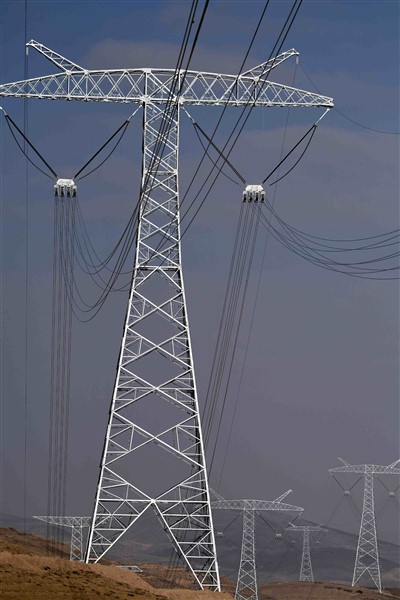
If you’ve ever driven along a highway or stood in an open field under a web of metal trusses stretching toward the horizon, you’ve seen electrical tower stands—they’re the quiet backbone of the power grid, holding thousands of volts of electricity safely above ground to keep our homes, hospitals, and factories running. As a supplier of these tower stands, I get a lot of questions from line contractors and utility managers: “Do these massive, heavy-duty structures really need regular calibration? We installed them to last 50 years, so why check on them every year or two?” Electrical Tower Stand

For the first decade I was in this business, I’d have nodded along a little. The tower stands we build are engineered to withstand hurricane-force winds, ice loads, and seismic shifts—they’re built to be tough. But over time, I’ve seen first-hand what happens when calibration is skipped: a sagging tower that pulls power lines too tight, leading to snapped conductors during a winter storm; a misaligned cross-arm that causes a deadly arc between two phases; a tower lean that shifts the load on a foundation until it cracks. Those aren’t just equipment failures—they’re safety risks and costly outages that disrupt communities. So today, I want to break down what calibration for electrical tower stands actually is, why it’s non-negotiable, and how we as suppliers work with our clients to make it manageable.
First, let’s clear up what “calibration” means in this context, because it’s not the same as calibrating a thermostat or a power meter. For electrical tower stands, calibration refers to verifying and adjusting the tower’s alignment, structural geometry, and load-bearing parameters to match its original design specifications. That includes checking vertical plumb (how straight the tower is relative to the ground), cross-arm level (to keep power lines at the correct height and spacing), conductor sag (the amount of slack in the lines between towers), and even the tension on the tower’s guy wires (the cables that stabilize tall, narrow towers in areas without solid foundations).
When a tower stands leaves our factory yard or construction site, it’s built to exact measurements: a 100-foot transmission tower should be plumb to within 0.25 degrees, cross-arms spaced 10 feet apart to prevent phase gaps, guy wires tightened to 2,000 pounds of tension to handle 70 mph winds. But once it’s in the ground, external forces start working against it—forces our engineering models can’t perfectly account for years down the line.
Let’s start with natural wear and tear, because it’s the most obvious culprit. Every year, wind shear twists tower trusses; heavy ice buildup adds unexpected weight to cross-arms, pulling them out of level; freeze-thaw cycles in the ground shift foundation concrete, tilting the entire tower. In my 18 years in this industry, I saw a 200-foot tower in Iowa that leaned 12 degrees in just six years after a series of 100 mph summer storms. The initial calibration check we did when the tower was installed was spot-on, but the repeated wind events slowly shifted the anchor bolts in the foundation, and by the time the utility company noticed, the tower was at risk of collapsing during the next big storm. Calibration would have caught that lean early—adjusting the guy wires and re-tensioning anchors before the problem became critical.
Then there’s something called “dynamic load drift,” which is a term the grid engineering teams use, but I’ve seen it enough to know it’s real. Power lines aren’t static; they expand when it’s hot and contract when it’s cold. That constant expansion and contraction pulls on the tower stands, shifting their alignment over time. A tower that’s plumb in July might be leaning half a degree by January just from the stress of a thousand miles of power lines tugging on it. Over time, that small shift adds up: cross-arms start to slope, phase gaps narrow, and you get the risk of electrical arcing—something that can cause a blackout for hundreds of customers, or even a dangerous fire if the arc touches vegetation near the tower. Regular calibration checks catch these subtle shifts before they escalate.
I know what a lot of our clients think: “This is just another line item in the maintenance budget we don’t want to spend on.” I get it. Utility companies are already stretched thin, prioritizing new infrastructure over routine checks, and tower calibration can feel like an afterthought. But here’s the thing: skipping calibration leads to way more expensive problems down the line. Let’s do the math: a single unplanned outage from a misaligned tower can cost a mid-sized city $100,000 an hour in lost business, emergency services, and repair costs. That’s the kind of expense that’s hard to justify, especially during peak seasons when grid demand is highest. Calibration, on the other hand? Most of our small-to-medium tower calibration jobs run a few thousand dollars, and can be done in a day or two with minimal disruption to service. It’s not just a maintenance task—it’s an investment in reliability.
Now, I want to talk about what we as suppliers bring to this process, because it’s not just sending a contractor with a level and a tape measure. When we sell tower stands, we also provide our clients with custom calibration schedules tailored to their specific location, tower height, and design. For example, a tower in Florida, where hurricanes and heavy rain are common, needs calibration checks twice a year—once after hurricane season and once before summer thunderstorm season. A tower in Kansas, where wind and ice are the main risks, needs annual checks to adjust guy wires and adjust foundation alignment. We also offer remote calibration tools, like GPS-based alignment sensors that can be mounted on tower stands and send real-time data on lean, tension, and temperature to our clients’ operations teams. That means they don’t have to send a crew out every time to check—they can track small shifts and only send someone for a calibration adjustment when the data shows it’s needed.
Wait, but let’s address the counterargument I hear all the time: “Our towers are built to last 50 years, so why check them every few years?” The truth is, even the best-built tower stands aren’t immune to gradual degradation. Steel corrodes—especially in coastal areas with salt air, or in industrial areas with acid rain. Corrosion weakens truss joints, making the tower more susceptible to shifting under load, and calibration checks are the only way to spot that before a joint fails. We had a client in Texas a few years ago who skipped calibration for 10 years because they thought their towers were fine. When they finally had a crew do a full inspection, they found three towers with corroded truss connections that had shifted 3 degrees off-plumb. If they’d done annual calibrations, they could have re-tightened the connections and replaced small parts to fix the shift, instead of having to replace entire tower segments for $50,000 each after the corrosion had advanced.
Another point I want to make is safety for the line workers who maintain these towers. When a tower is misaligned, it’s not just a risk to the power grid—it’s a risk to the people who climb those towers to replace insulators, fix conductors, or perform routine maintenance. A misaligned cross-arm can be uneven, making it harder for workers to balance during a climb, and a tower lean can throw off the center of gravity, leading to falls or equipment damage. Calibration ensures that tower stands are stable and safe for workers to access, which is a non-negotiable part of any utility’s safety standards.
I also want to mention that calibration isn’t just about fixing problems—it’s about optimizing performance. When a tower is properly calibrated, power lines can be spaced and sagged to their exact design specifications, which reduces energy loss in the lines. Saggy lines mean the electricity has to travel a longer distance, leading to small but cumulative energy waste. Properly calibrated towers minimize that waste, which is a big deal as utilities work to meet net-zero goals and reduce their carbon footprint. It’s a small adjustment, but it adds up over thousands of miles of transmission lines.
Now, I know some of you might be thinking: “Our existing tower stands weren’t installed with calibration in mind, so we can’t do this.” That’s not true. No matter how old your tower stands are, we can work with you to develop a calibration plan—whether that’s a one-time alignment to fix existing shifts, a schedule of regular checks, or the installation of remote monitoring tools. We’ve worked with utility companies that have towers dating back to the 1970s, helping them bring their structures back into spec and keep them operating safely for decades more.
At the end of the day, electrical tower stands are the unsung heroes of the power grid. They don’t get the same attention as solar panels or power plants, but without them, electricity can’t reach the places it’s needed most. And like any piece of heavy-duty equipment that’s constantly under stress, they need regular care to keep working properly. Calibration isn’t a luxury—it’s a necessity. It protects your budget, keeps your grid reliable, keeps line workers safe, and ensures that the lights stay on for everyone who depends on your service.
If you’re a utility manager, line contractor, or facility operator looking to develop a calibration plan for your tower stands, or you need more information about the solutions we offer to make the process easier, we’re here to help. We’ve spent decades engineering tower stands that are durable and easy to maintain, and we work closely with our clients to build custom plans that fit their needs, budget, and timeline. Reach out to our team today to learn more about how we can support your grid reliability goals through proper tower calibration.
Tension Towers References
- North American Electric Reliability Corporation (NERC). Transmission Infrastructure Reliability Standards: Alignment and Structural Integrity Requirements. 2021.
- Institute of Electrical and Electronics Engineers (IEEE). IEEE Standard for Structural Integrity of Overhead Transmission Line Towers. IEEE Std 1220-2018.
- American Society of Civil Engineers (ASCE). Load and Resistance Factor Design Specification for Transmission Structures. ASCE 10-15.
- Electric Power Research Institute (EPRI). Routine Maintenance and Calibration Practices for Overhead Transmission Tower Infrastructure. 2022.
- Federal Energy Regulatory Commission (FERC). Transmission Infrastructure Management Best Practices. 2020.
Hebei Yifeng Steel Structure Co., Ltd.
As one of the most professional electrical tower stand manufacturers and suppliers in China, we offer a wide range of products with superior quality. Please feel free to buy cost-efficient electrical tower stand for sale here from our factory. Contact us for more details.
Address: Guangchuan Town Industrial Zone, Jing County, Hengshui City, Hebei Province
E-mail: hbyfgjg@163.com
WebSite: https://www.yf-powertowers.com/
