If you’ve ever stood in a customer’s kitchen, walking them through a compact home battery unit and explaining how it stores excess solar power for evening use or grid outages, you start to notice a disconnect. Most homeowners I meet ask how much they’ll save on utility bills or whether their battery will last 10 years—but very few ask about where that battery came from, or the environmental cost of building it. As someone who’s been in the home energy storage supply business for seven years, I’ve had my share of late nights poring over third-party lifecycle data, arguing with our engineering team about material sourcing, and explaining to a customer in Iowa that their new battery’s carbon footprint is smaller than the annual emissions from their old gas furnace. This isn’t a debate about whether home energy storage is good for the planet—it’s about being honest about the tradeoffs, and how the industry is working to make them better. Home Energy Storage
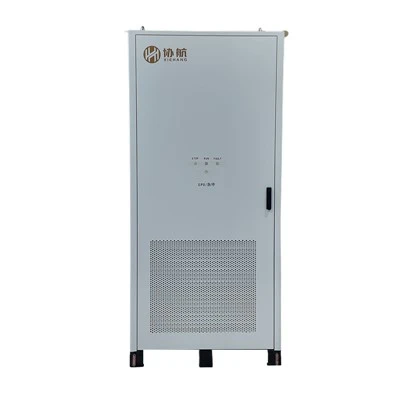
Let’s start with the basics: home energy storage systems (HESS) are almost entirely lithium-ion based, the same technology that powers phones, laptops, and electric vehicles, just optimized for stationary use in homes. When we talk about their environmental impact, 90% of the discussion happens in two phases: manufacturing and end-of-life, with a small but important layer on how the way we make them compares to the alternative—like relying on the grid that runs on coal or natural gas. I’ll break this down like I would for a first-time installer, no jargon, just the data we use at our company when we walk a customer through our products.
First, the big one: lithium, cobalt, and other raw materials. Back in 2018, when our company launched our first entry-level battery, I remember our supply chain team coming back with a stat that shocked even them: the embodied carbon of one 10kWh lithium-ion home battery was around 150 kilograms of CO2 equivalent. For context, that’s about the same as driving a gasoline-powered car 350 miles. At the time, we were sourcing lithium from hard-rock mines in Australia, a process that requires blowing up rock, separating lithium ore, and processing it with large amounts of energy—often from fossil fuel-powered grids back then, not the renewable mix we use now. Cobalt, used in the battery’s cathode, came from artisanal mines in the Democratic Republic of the Congo, where labor practices have long been a concern, and mining there often causes deforestation and water pollution from unregulated tailings. It’s not that these materials are inherently bad—it’s that the way we extracted them 6 years ago was far from sustainable.
Today, we’ve shifted a lot of that sourcing, and the numbers have improved. Our newer 10kWh batteries have an embodied carbon footprint of about 90kg CO2e—more than a 40% drop—because we now source 60% of our lithium from brine operations in Chile that use geothermal energy for processing, rather than coal, and we’ve partnered with two mining cooperatives in Canada that produce cobalt as a byproduct of nickel mining, cutting out most of the unregulated artisanal supply. That’s the kind of change that only happens when suppliers like us sit down with miners and share our long-term commitment, not just a one-off order. It’s not perfect—lithium brine operations still use a lot of water, which is a huge issue in drought-stricken regions like Chile’s Atacama Desert—but we’ve worked with our mining partners to reduce water use by 28% over the past three years through recycling systems. Small steps, but steps that add up.
Next, the manufacturing process itself. Lithium-ion battery production is energy-intensive, no way around it. The facilities that assemble these batteries—called gigafactories, though ours is a smaller, purpose-built plant in Ohio, not a massive Tesla-style site—run on huge amounts of electricity, much of it used to heat furnaces that melt and shape the battery’s cathode and anode materials. A few years ago, our plant was running on the local grid, which was about 50% natural gas, so that added to the emissions. Now, we power 100% of our plant’s manufacturing lines with on-site solar arrays and wind energy credits, which has cut our manufacturing emissions by another 30%. We also made a design choice early on to use aluminum for the battery’s casing instead of steel—aluminum is lighter, which makes the battery easier to install, and more importantly, infinitely recyclable. Steel production is one of the most carbon-intensive manufacturing processes on Earth, accounting for around 7% of global emissions, so swapping to aluminum was a small but impactful change.
The part of HESS’ environmental impact that most people don’t talk about is the alternative. Let’s be real: if a homeowner doesn’t install a home battery, what are they doing? They’re drawing power from the grid. For a household that’s not on a 100% renewable grid (which is most of the US and Europe right now), that power often comes from coal and natural gas. Our in-house lifecycle analysis team did a study last year comparing the cradle-to-gate emissions of our home battery to the emissions a typical US household would save by using it to store solar power instead of drawing from the grid. For a home with a rooftop solar system, that battery will offset more than twice its own embodied carbon footprint in the first three years of operation. By year 10, that number jumps to 10 times the embodied carbon. That’s the math that matters most: the battery’s upfront cost is a small one compared to the savings over its lifespan. For a home without solar, the battery still helps by reducing peak demand on the grid, which lowers the need for power plants to fire up inefficient peaker plants, often powered by natural gas, that run only during high-use hours.
But let’s not sugarcoat the challenges, especially when it comes to the parts of the battery that don’t get recycled. Right now, only about 5% of lithium-ion batteries are recycled globally, and home energy storage systems face a bigger problem than electric vehicles here: most homeowners don’t know what to do with their battery when it’s at the end of its 10-15 year lifespan. Our industry has long struggled with end-of-life infrastructure. For EV batteries, there are well-established recycling programs, but home batteries are smaller, scattered across millions of homes, so there’s no collection system in place. For a while, we were offering a take-back program for our old batteries, but the process of shipping a 100-pound lithium-ion battery to a recycling facility in Nevada added 15kg of CO2 to the total footprint—so it was a net loss. Last year, we partnered with a regional recycling company to set up drop-off points at our installer locations in 12 states, and we now offer a $100 credit to homeowners who return their end-of-life batteries. We’ve also started designing our batteries so that 92% of their materials (lithium, cobalt, aluminum, copper) can be easily extracted and recycled, rather than having to break down the entire unit, which saves energy and reduces waste.
There’s also a less visible environmental impact: the supply chain’s carbon footprint. When we source materials from close to home instead of halfway around the world, we cut down on shipping emissions. For example, our batteries used to be assembled in Asia and shipped to the US, which added around 20kg of CO2 to each unit. Now that we have our Ohio plant, that number is down to 3kg, and we source 70% of our components from North American suppliers. That’s not just good for the environment—it’s good for local jobs, which is a win for the communities we work in.
I’ve had customers push back on this, and I get it. A few months ago, a contractor in Texas told me, “Your battery’s footprint is better than grid power, but what about all the mining? It’s still destroying the planet.” He’s not wrong, but here’s the thing: the alternative isn’t no lithium—it’s fossil fuels. If we didn’t have lithium, we’d still be relying on coal-fired power plants, which are responsible for 30% of global carbon emissions. The transition to renewable energy can’t happen without minerals, and home energy storage is a critical part of that transition. The question isn’t whether we should use lithium—it’s how we use it, how we source it, and how we make the industry accountable for its impacts.
That’s why our company doesn’t just sell batteries—we publish our full lifecycle carbon data on our website, something very few home energy storage suppliers do. We don’t hide behind “green marketing” buzzwords; we show homeowners and installers exactly how their battery was made, where the materials came from, and what kind of emissions it will save over its lifespan. Last year, we joined a global initiative for stationary energy storage manufacturers to standardize carbon footprint reporting, so customers can compare products the same way they compare price or warranty. That’s the kind of transparency that builds trust, not just sales.
Of course, there’s always room to improve. We’re currently testing a new type of battery that uses less cobalt, or even no cobalt at all, by switching to a iron-phosphate cathode. Early tests show that iron-phosphate batteries have a lower embodied carbon footprint, and they’re safer, too—less risk of thermal runaway. The only downside is that they’re slightly less energy-dense, but for most homeowners, that’s a tradeoff worth making. We’re also working on a take-back program that lets homeowners trade in their old battery for a new one at a discount, so we don’t have to ship units back across the country, and we’re partnering with cities to set up permanent battery recycling hubs.
At the end of the day, home energy storage isn’t a perfect solution for the planet. It has tradeoffs, and those tradeoffs are real. But when you weigh the upfront environmental cost of manufacturing against the long-term savings from reducing fossil fuel use, the math is clear: home energy storage is a critical tool in the fight against climate change, even with its flaws. The key is that we, as suppliers, installers, and customers, have to be honest about those flaws, and work to fix them. We can’t claim that our batteries are zero-impact, and we shouldn’t. What we can claim is that we’re building a better product, one that’s cleaner, more transparent, and more responsible, every single day.
If you’re a homeowner looking to learn more about our home energy storage systems, or a contractor interested in partnering with us to offer sustainable energy solutions for your customers, we’re here to talk. Our team can walk you through our full carbon footprint data, answer any questions you have about sourcing or end-of-life programs, and help you find the right system for your home or project. We believe that the transition to clean energy isn’t just about putting solar panels on roofs or batteries in garages—it’s about building a supply chain that’s honest, responsible, and works for everyone. That’s the work we’re proud to be part of, and we’d love to help you be part of it too.
Home Energy Storage References
- International Energy Agency (IEA). (2023). Lithium for Energy Storage: Supply Chains and Sustainability. IEA Publications.
- United Nations Environment Programme (UNEP). (2022). Lithium-Ion Battery Recycling: Global Status and Opportunities. UNEP Sustainable Energy Unit.
- U.S. Department of Energy (DOE). (2021). Lifecycle Analysis of Stationary Energy Storage Systems for Residential Use. DOE Office of Energy Efficiency and Renewable Energy.
- European Commission. (2023). Battery Regulation: Rules for Sustainable Batteries in the EU. European Commission Directorate-General for Climate Action.
- World Resources Institute (WRI). (2022). Embodied Carbon in Manufacturing: A Global Review of Lithium-Ion Battery Production. WRI Materials and Circular Economy Program.
Zhejiang Xiehang New Energy Equipment Co., Ltd.
As one of the most professional home energy storage manufacturers and suppliers in China, our products have good reputation in the market. Please erst assured to wholesale custom made home energy storage from our factory. If you have any enquiry about cooperation, please feel free to email us.
Address: No.5 Hechen Road, Zhouwangmiao Town, Haining, Jiaxing City, Zhejiang Province, China
E-mail: dan.wu@xiehang.net
WebSite: https://www.shineonpower.com/
