If you’ve ever stopped to examine an industrial plug, you’ve probably noticed something that looks like a basic power connector at first glance—until you dig a little deeper. When I started in the industrial plug supply business 12 years ago, I assumed the difference between male and female plugs was just a casual labeling thing, something we could sort on a warehouse shelf without much thought. But I quickly learned that in heavy manufacturing, construction, and any space where power needs to be consistent, safe, and reliable, male and female industrial plugs are more than just a pair—they’re two distinct, purpose-built components that can make or break a job site. Today, I want to break down those differences, what they mean for the work you do, and why it matters to choose the right one for your setup. Industrial Plug
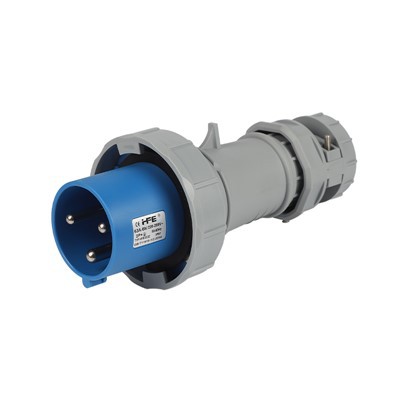
First, let’s get the basic definition out of the way because there’s no fancy trick here: in the industrial plug world, male plugs are the ones that have exposed metal pins sticking out of their body, and female plugs have recessed sockets that those pins plug into. That’s the surface difference, but if that was all there was to it, we wouldn’t have spent thousands of hours testing each component in our warehouse and helping customers troubleshoot bad connections on assembly lines. The real differences are in how they’re engineered for safety, durability, and function, all of which matter more when you’re dealing with high voltage or environments that range from freezing construction yards to dusty factory floors.
Safety is where the biggest gap between male and female plugs becomes obvious, especially when you’re working with power over 100 volts, which is standard for most industrial equipment. Male plugs have those exposed pins, right? That seems like a red flag, but here’s the thing: in standard configurations, those pins are only live when the plug is engaged. When it’s not plugged in, the pins are covered by a protective cap or the housing is designed so you can’t touch them accidentally. Female plugs, on the other hand, have recessed sockets that are designed to contain the live parts, so there’s zero chance of you touching a live pin if you’re working on a disconnected circuit. This matters a lot for both installers and maintenance teams. I’ve had customers tell me they saved a teammate from a shock when they didn’t realize a male plug had a faulty cap, while female plugs in the same setup never had that issue. That said, male plugs aren’t inherently dangerous—they just have different safety features tailored to where they’re used. For example, male plugs are often mounted on the end of power cables that run to portable equipment, so when you’re moving that equipment around, the female socket on the wall or a fixed box stays safely installed, out of reach of moving parts or people walking by. Female plugs are usually fixed to the power supply side, so there’s less risk of contact with live parts when things are set up correctly.
Durability is another area where male and female industrial plugs differ, and it’s all tied to how they’re used. Male plugs take a lot of abuse because they’re the part that gets plugged and unplugged hundreds, sometimes thousands of times a year, especially on construction sites where equipment is moved daily. Think about it: every time you plug a jackhammer, a generator, or a portable light into a power source, you’re handling that male plug. So they’re built with tougher outer housings—usually rubberized or thermoplastic that can resist drops from 10 feet, exposure to rain, and even minor chemical spills. The pins inside are usually made of brass or copper with a thin plating of nickel or tin to prevent corrosion and resist wear from repeated insertion. We’ve tested male plugs in our warehouse by plugging and unplugging them 10,000 times, and the ones that pass still maintain a tight connection, no loose pins. Female plugs, by contrast, have sockets that are engineered to grip those male pins, so their internal design is focused on tension. The sockets are spring-loaded, so when a male pin goes in, the socket presses back to create a tight, low-resistance connection that doesn’t overheat. That means female plugs might have a softer internal component, but their outer housing is still tough because they’re often mounted on boxes or panels that get kicked or bumped. I’ve seen a construction worker kick a female plug housing that was mounted on a generator, and the only damage was a small scratch, while a male plug dropped the same way would have a bent pin. That’s not to say either is weaker—just built for their specific workload.
Functionality is where the lines start to blur a little, but the differences still matter a lot for how your power system works. Industrial plugs are part of a circuit, so male and female plugs work in pairs, but they have different roles depending on the setup. Portable equipment, like a circular saw or a temporary conveyor on a job site, almost always uses a male plug on the power cable. Why? Because it’s easier to handle a cable that ends in a male plug when you’re moving the equipment around. The power source, whether it’s a wall outlet on a factory wall or a temporary power box on a construction site, has a female socket. That way, you don’t have to run a male socket on your power source that could get damaged by dirt or debris. On the flip side, fixed power outlets—like the ones mounted to a wall for a heavy assembly line—are female, because you don’t want to have to unplug a fixed line every time you adjust a machine. There are exceptions, of course. For example, some specialized equipment uses two male plugs for three-phase power, but that’s a niche case. The general rule is: male plugs are for moving parts and cables, female plugs are for fixed power sources.
Another key difference is resistance to environmental factors. Industrial work happens everywhere, from desert construction sites to food processing plants that wash down equipment with high-pressure hoses. Male plugs are designed to be splash-proof or dust-proof, but their open face (where the pins are) means they’re not as well-sealed as female plugs when they’re disconnected. That’s why most male plugs come with a rubber cap that you have to put on when they’re not in use. Female plugs, since their sockets are recessed, can be sealed with a cover that just flips closed when not in use, keeping dust, water, and food particles out. I had a customer in the food processing industry tell me they switched all their wall sockets from male to female 10 years ago, and they’ve cut down on equipment failures from water getting into the power source by 70%. That makes sense—you don’t want cleaning solution seeping into a socket that’s part of your main power supply. For male plugs, the cap is a simple fix, but it’s easy to forget to put it on, which is why training is just as important as the component itself.
Now, you might be wondering: if they’re so different, why do people mix them up? A lot of the time, it’s just terminology. Some people call any plug a “male” or “female” regardless of function, which can lead to mistakes like buying a male plug for a wall outlet, which just doesn’t fit. At our company, we get dozens of calls a month from customers who ordered the wrong part because they didn’t realize the functional difference, not just the physical one. For example, a contractor might order a female plug for a portable generator cable, and it won’t plug into the temporary power box, which has a male plug (wait, no—let me correct that: temporary power boxes have female sockets, so a portable generator cable should have a male plug, so if you order female, it won’t fit. That’s the kind of mix-up that delays jobs and costs money).
I’ve learned over the years that the best way to serve customers isn’t just to sell them a plug—it’s to match the plug to their specific job. If you’re a contractor running temporary power on a job site, you need male plugs on all your equipment cables, with the rubber caps, so you can move them around without worrying about damage. If you’re a factory maintenance manager replacing wall sockets, go with female, because they’re easier to keep sealed and more resistant to dirt and water. We also offer custom pairs so you don’t have to mix and match different brands, which is a common source of loose connections. A loose connection is a big problem—it causes overheating, which can lead to fires, or power drops that damage sensitive equipment like PLCs or motors. That’s why we test every pair we sell to make sure the connection is tight, with less than 0.1 ohms of resistance, so you don’t have to worry about it mid-job.
Let’s also talk about standards, because this isn’t just some random difference—there are international standards that dictate how male and female industrial plugs are built. For example, IEC 60309 is the standard for low-voltage industrial plugs and sockets, and it clearly defines male plugs as the “pin-type” and female as the “socket-type,” along with specifications for voltage, current rating, and environmental protection. In North America, we have NEMA standards, which are similar but have some differences. That means a male plug from a European supplier might not fit a female socket in North America, and vice versa. That’s why it’s so important to buy from a supplier that knows these standards, not just someone selling generic plugs on Amazon. We keep up with IEC and NEMA standards, and we label every plug clearly with its rating, so you don’t have to guess if it will work with your existing setup.
Another thing I see a lot is people thinking that male plugs are always less durable because of the exposed pins, but that’s not true if you use them correctly. We’ve had customers send back male plugs that they dropped, and most of the time the only damage is a slightly bent pin, which they can fix with a pair of pliers and keep using. A female plug with a bent socket is way harder to fix, because the spring tension is off, so you have to replace the whole thing. That’s a big cost difference over time—male plugs have lower repair costs, because minor damage is easy to fix, while female plugs usually need to be replaced. That’s something to consider when you’re budgeting for parts: male plugs might have a slightly higher upfront cost, but their lower maintenance cost makes them a better long-term investment for portable equipment.
I want to be clear that there’s no “better” plug between male and female—they’re two halves of a system, each designed for a specific job. Male plugs are for moving cables and equipment, built to handle repeated insertion and drop abuse, with exposed pins that are safe when capped. Female plugs are for fixed power sources, built to keep live parts contained, with socket tension that ensures a tight connection every time. The difference isn’t just physical—it’s functional, tied to safety, durability, and how you use power on a job site.

If you’re looking to replace old plugs, set up a new power system, or just make sure you’re using the right parts for your equipment, don’t guess. A wrong plug might seem like a small mistake, but it can lead to downtime, safety issues, or even damage to expensive machinery. We’ve worked with hundreds of contractors, factory managers, and maintenance teams over the years, and we’ve helped them pick the right male and female plugs for their specific needs, no matter if they’re working on a small construction job or a large manufacturing facility. We can help you match the plug to your equipment, make sure it meets the relevant standards, and give you the support you need to get the job done safely. If you’re ready to talk about your next project, reach out to us to discuss your power needs and get the right parts for your team. No generic solutions, just practical advice from someone who’s been in the industrial plug business long enough to know what works and what doesn’t.
Panle Mount Industrial Plug References:
- IEC 60309-1:2019, Plugs, socket-outlets and couplers for industrial purposes – Part 1: General requirements.
- NEMA Standard 250-2021, Industrial Control and Power Equipment.
- Occupational Safety and Health Administration (OSHA), 29 CFR 1910.305, Electrical Wiring, Components, and Equipment.
- National Electrical Manufacturers Association (NEMA), Industrial Plug and Socket Performance Specifications.
Zhejiang Hefeng Electric Co., Ltd.
Zhejiang Hefeng Electric Co., Ltd. is one of the most professional industrial plug manufacturers and suppliers in China, featured by quality products and low price. Please rest assured to buy durable industrial plug made in China here from our factory. Also, OEM service is available.
Address: Wenzhou Daqiao Industrail Park, Beibaixiang Town, Yueqing City, Zhejiang Province, China
E-mail: hefengplug@chinahfe.com
WebSite: https://www.hfcee.com/
