Hey everyone, it’s Jake here, from your go-to pad mounted transformer oil tank supplier – and before you ask, no, I’m not gonna bore you with 10-page technical jargon that’ll make your eyes glaze over. Today, let’s talk about something we talk about every day, but most folks (even a lot of folks in the energy game) don’t fully get: the environmental impacts of the oil in pad mounted transformer tanks. Yeah, I know, oil sounds boring, but trust me – this stuff matters way more for our planet than you might think, especially when you’re talking about that small, unassuming metal box that keeps power going to your neighborhood’s lights, AC, and coffee makers. Pad Mounted Transformer Oil Tank

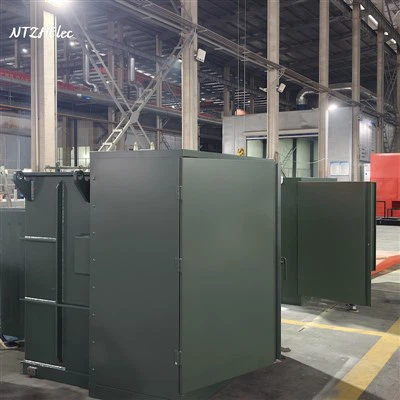
First, let’s ground this in what we actually do. We sell these pad mounted tanks for a living – they’re the compact, above-ground units you see tucked next to grocery stores, apartment buildings, and even quiet residential streets, way more low-profile than those big, scary grid transformers. The oil inside? It’s not just some random fluid we pour in to make the thing run. It’s insulation and coolant, plain and simple – stops electricity from shorting out and keeps the transformer from overheating so it doesn’t blow up. But that oil is a fossil fuel-derived product, mostly mineral oil, and that’s where the environmental stuff starts.
Let’s start with the big one people care about: leaks. I’ve been doing this 12 years, and I’ll tell you – leaks don’t just happen from crummy old units. Sure, a rusted weld on a 30-year-old tank? That’s a problem. But even new tanks? If you skip a proper pad installation (something we actually go out of our way to walk customers through, because cutting corners here costs everyone later), or if you get hit by a wayward tree branch or a construction crew with a backhoe, you’re looking at oil seeping into the soil and groundwater. I saw a job last year in a small town where a local contractor tried to save a few bucks on the pad base, skipped the secondary containment, and a line got punctured. That’s 500 gallons of oil sitting in the dirt for 6 months before anyone noticed – bad for the local creek, bad for the people who use the well water there.
Wait, but what about synthetic or ester oils? I know a lot of folks in the space have been shifting to those lately, and yeah, they’re better if a leak happens – they biodegrade faster, less toxic. But they’re way more expensive, and a lot of older grids can’t handle the higher flash point or different cooling properties. So it’s not a one-size-fits-all. For us, we always walk customers through both options, because at the end of the day, the last thing I want is a customer calling me at 2 a.m. because they spilled oil and wrecked a local wetland.
Next up: end-of-life. These tanks don’t last forever – usually 30 to 40 years, if you take care of them. When they reach the end of their run, you’ve got two big problems: the oil, and the tank metal. A lot of old, improperly recycled transformers end up with oil being dumped illegally, or burned, which releases volatile organic compounds (VOCs) and particulate matter into the air. I’ve seen transformers burned in open fields just to get the metal out – that’s not only bad air quality for nearby residents, that oil has polychlorinated biphenyls (PCBs) if it’s pre-1970s, which are super toxic, persistent in the environment, and have been linked to all sorts of health issues. We make a point to only supply tanks for new builds or replacements with clear end-of-life paths, but we also help customers connect with reputable recyclers, because dumping that oil is just not an option we’ll support.
Another impact I don’t hear enough people talking about: resource extraction to make that oil. Most transformer oil is a byproduct of crude oil refining, right? So every drop is tied to drilling – which has its own environmental costs, from habitat destruction to oil spills during transport, and it’s a non-renewable resource. When we switched a few years back to supplying tanks that work with both mineral oil and those newer synthetic bio-based oils, that was a big deal for us. Not only does it give customers a more eco-friendly option, it reduces the demand for that crude oil byproduct. I get it, bio-based is more expensive upfront, but over the life of the tank, it’s cheaper on disposal, and customers love that they’re not contributing to the constant extraction.
Wait, let’s not forget about what happens during routine maintenance. When you change out old oil, or test it for impurities (super important to keep the transformer running right), if you don’t handle that waste oil properly, it’s just as bad as a leak. I’ve had customers come to us complaining because their maintenance guy just dumped old oil in a dumpster behind the shop – that oil gets to landfills, leaches into the soil, and sits there for decades. We provide free guides to every customer on how to properly store and dispose of waste oil, because it’s not just about selling the tank – it’s about making sure you do the right thing with all parts of it.
Is there a way to reduce these impacts without ditching pad mounted transformers entirely? Absolutely, and that’s what we push for with every customer. First, proper installation: we always require a secondary containment liner under the tank, so if a small leak happens, it doesn’t get into the soil. Second, regular oil testing and maintenance – catching a small leak early is way easier and way less costly than cleaning up a big spill. Third, switching to biodegradable oil whenever possible, especially for tanks in sensitive areas: near schools, parks, wetlands, places where a leak could cause real harm. And fourth, responsible end-of-life planning – partnering with certified recyclers that process both the oil and the metal, so nothing gets dumped.
I know a lot of you are probably thinking, “This is a pad transformer, not a nuclear power plant – how much impact can it really have?” But when you add it up across millions of these units around the world, it’s a huge number. Each tank holds, on average, 200 to 1,000 gallons of oil. If 1% of those leak every year, that’s tens of millions of gallons of oil entering the environment annually. That adds up to habitat damage, groundwater contamination, air pollution, more demand for non-renewable resources – it’s not trivial, even if each individual unit is small.
As a supplier, that’s why we don’t just sell metal boxes with oil inside. We build our tanks with thicker, more corrosion-resistant steel to extend their lifespan – less replacement means less waste overall. We source our steel from suppliers that follow ISO environmental standards, so the manufacturing process is cleaner. We stock both mineral and bio-based oils, so customers can choose what works for their budget and their environmental goals. And we don’t ghost customers after the sale – we’re here for the maintenance questions, the end-of-life guidance, everything.
If you’re a utility company, a municipality, a developer working on a new construction project, or anyone who needs pad mounted transformer oil tanks, I get that you’ve got a lot on your plate. You don’t have time to stress about environmental impacts, but that’s our job to handle for you. We don’t cut corners on quality, we don’t sell you something that’s gonna cause headaches down the line, and we make sure every part of the process – from installation to end-of-life – is as eco-friendly as possible.
I’m not here to pitch you the most expensive tank on the market. I’m here to pitch you a tank that works, keeps the power on, and doesn’t leave a mess for the planet. Because at the end of the day, that’s the whole point of this job, right? Keeping the lights on doesn’t have to mean hurting the planet. If you’re in the market for new pad mounted transformer oil tanks, or you just have questions about reducing the environmental impact of your current units, hit us up. We’re here to help, no pressure, no sales pitch that feels like a used car lot.
Transformer Radiator References:
- Institute of Electrical and Electronics Engineers (IEEE). (2018). Environmental Impacts of Transformer Fluids and Disposal Practices. IEEE Transactions on Power Delivery.
- U.S. Environmental Protection Agency (EPA). (2020). Best Management Practices for Transformer Oil Leak Prevention and Remediation. EPA Office of Water.
- International Organization for Standardization (ISO). (2021). ISO 14001: Environmental Management Systems for Electrical Equipment Manufacturing.
- North American Electric Reliability Corporation (NERC). (2019). End-of-Life Management Distribution Transformers: Environmental Considerations. NERC Technical Report.
- Society of Environmental Toxicology and Chemistry (SETAC). (2022). Life Cycle Assessment of Transformer Oil Types: Mineral vs. Bio-Based Esters. SETAC Journal of Industrial Ecology.
Nantong Zhihe Electric Co., Ltd.
As one of the most professional pad mounted transformer oil tank manufacturers and suppliers in China, we’re featured by quality products and low price. Please rest assured to wholesale cheap pad mounted transformer oil tank made in China here from our factory. Customized orders are welcome.
Address: NO.202 Jianghai West Road, Hai’an Town, Hai’an City, Jiangsu Province
E-mail: colt.ntzh@gmail.com
WebSite: https://www.ntzhelectric.com/
